2026 updates first, followed by historical reads and methods. Dates identify sources or events, not site publication. Prepared in September 2026; selected coverage, not daily news.
Adobe's 2026 studio preview makes continuity easier to carry between sessions. A production still needs to record which context is approved, provisional, or retired.
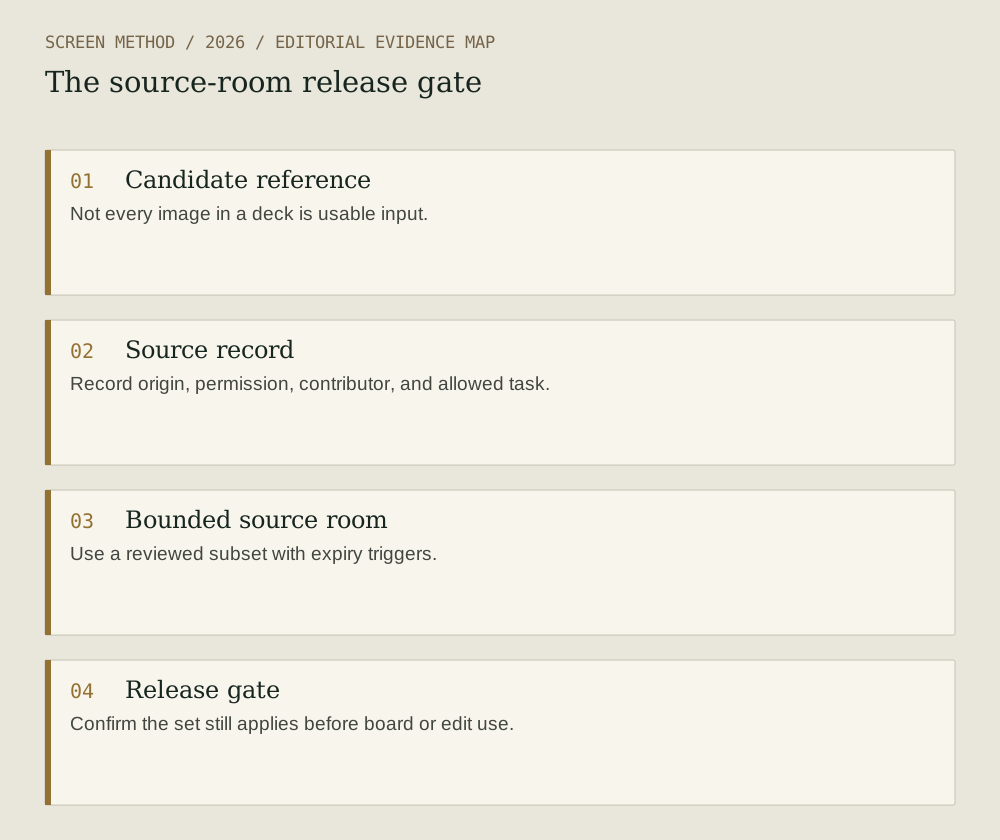
Adobe's 2026 custom-model and Foundry announcements make a familiar production problem sharper: a visual universe needs a governed source set before it can become reusable output.
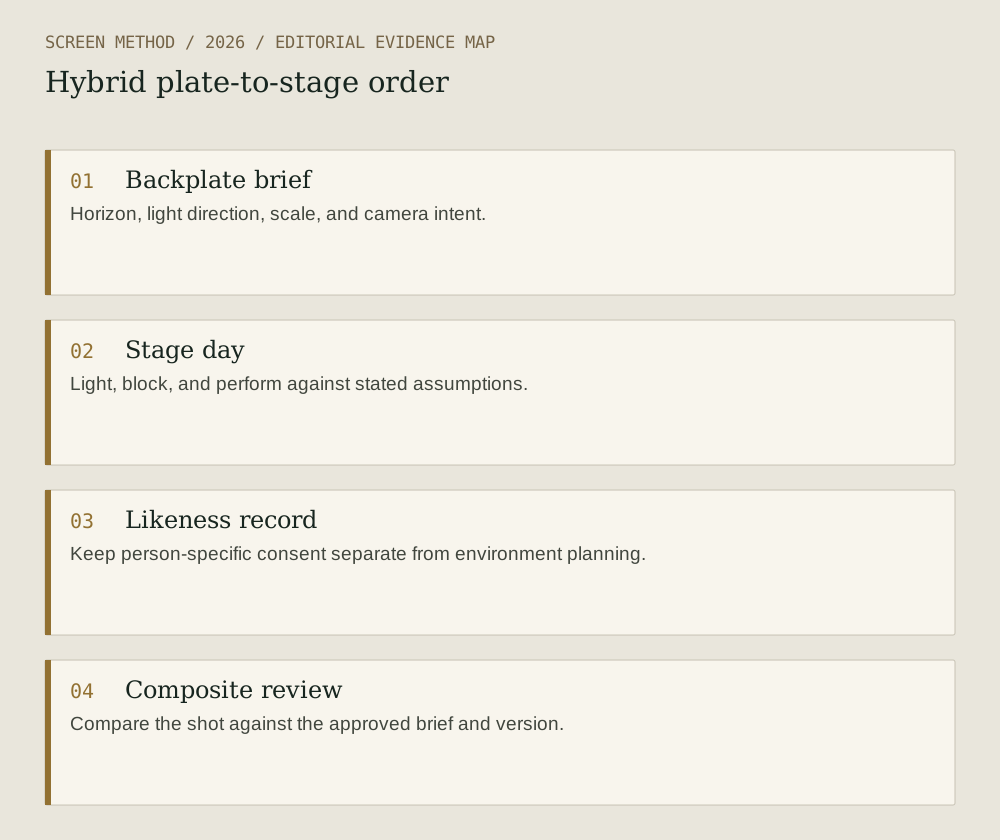
Adobe's MythOS case study offers a concrete hybrid-production lesson: an AI environment is still a lighting and consent decision made before the stage day.
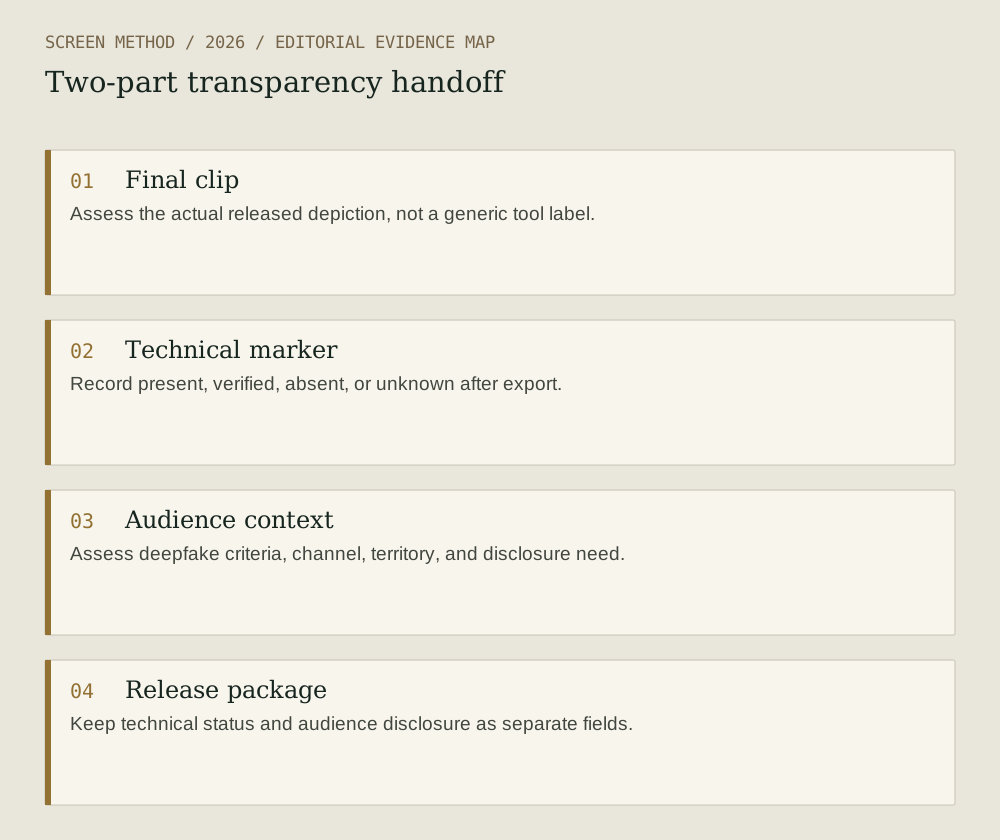
The Commission's 2026 Article 50 guidance distinguishes provider marking from deployer disclosure. Productions need both questions at their final delivery boundary.
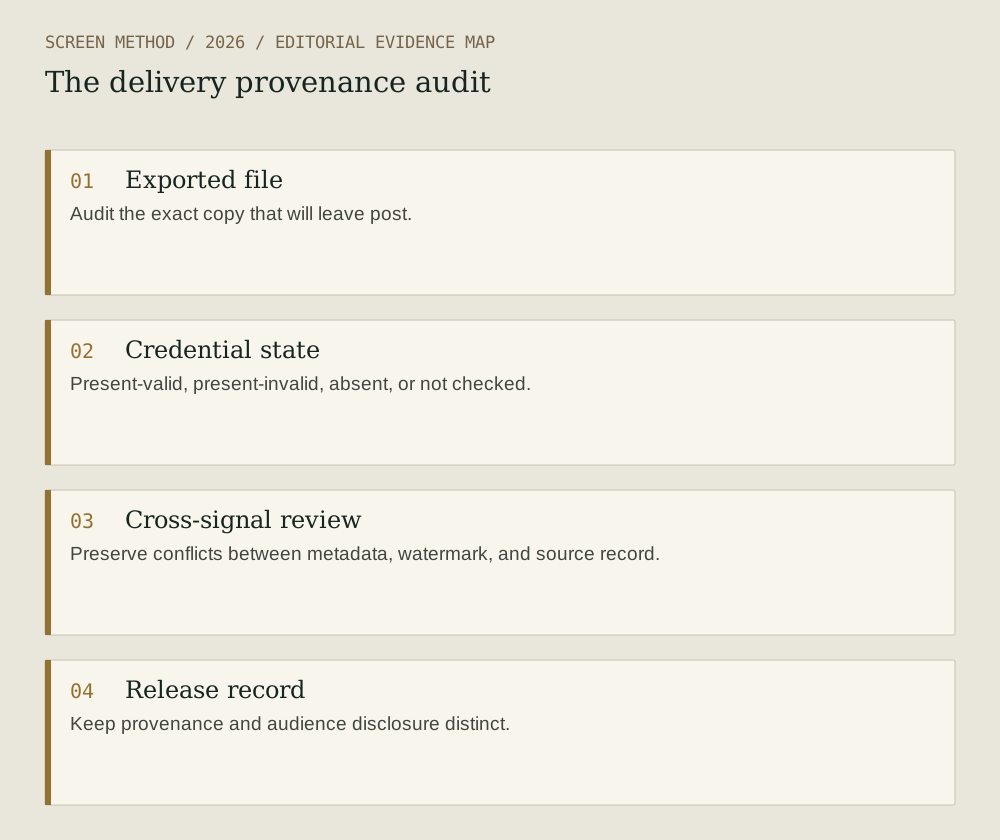
C2PA 2.4 adds an AI disclosure assertion, but a film team still needs to check what survives its own export and what the credential can actually establish.
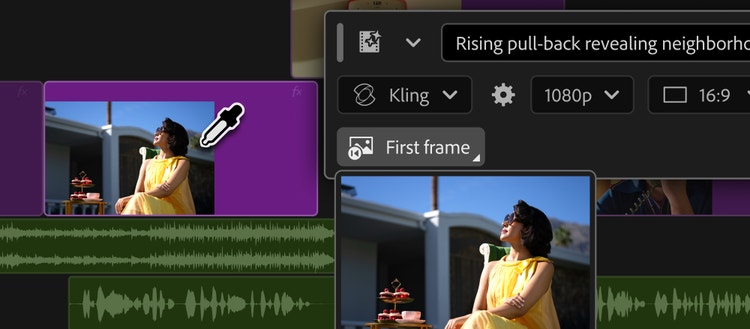
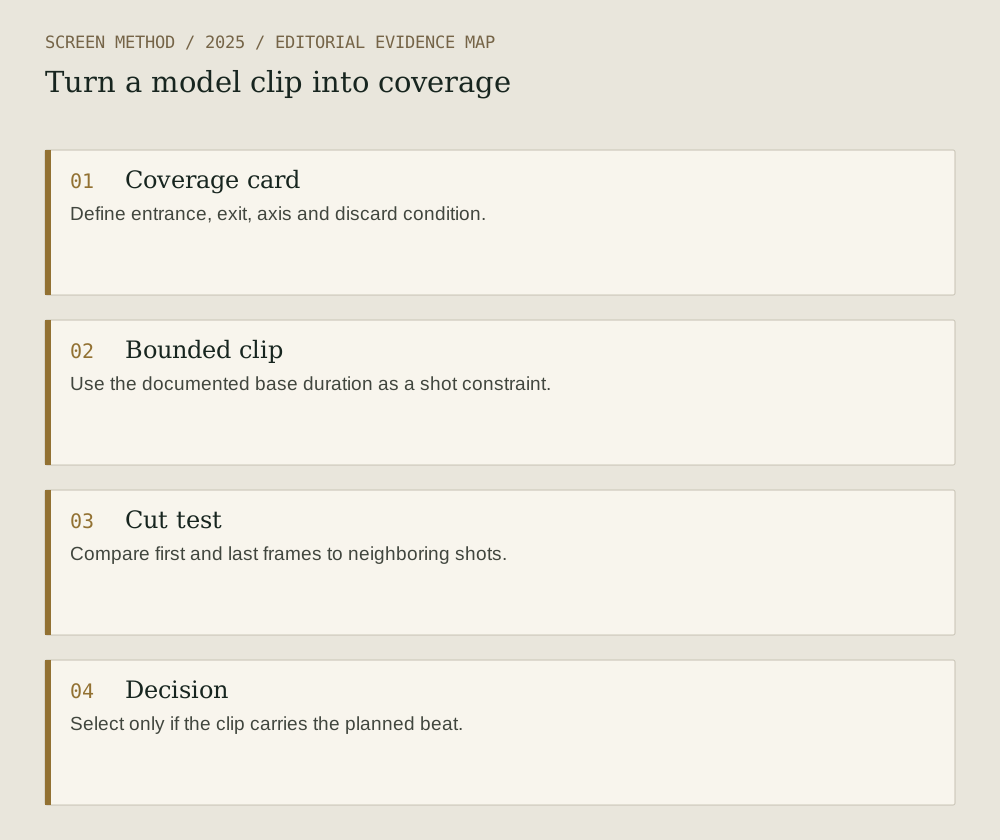
Adobe’s September Premiere update described project-frame-aware video generation and audio starting points. The useful craft response is to make the surrounding cut explicit before asking it to supply a missing piece.
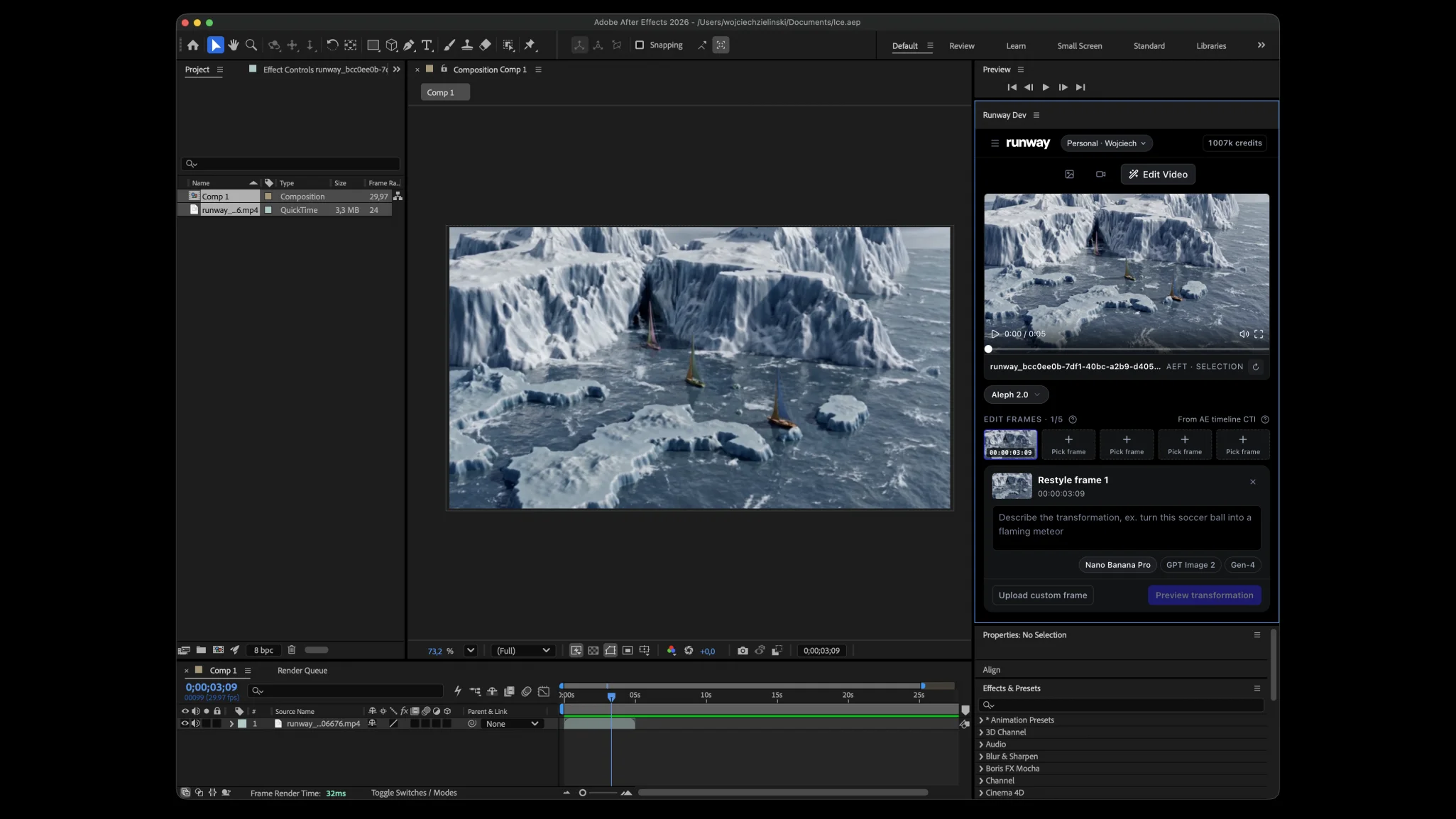
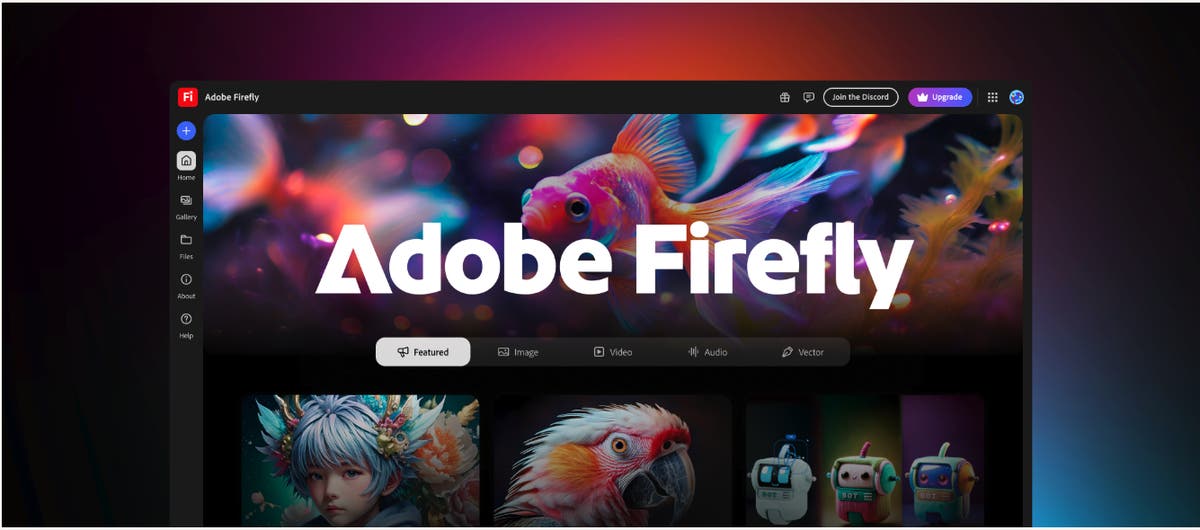
Adobe’s June Firefly update described storyboards, video generation and Quick Cut in one developing workspace. A production still needs to decide what a first cut is allowed to decide.
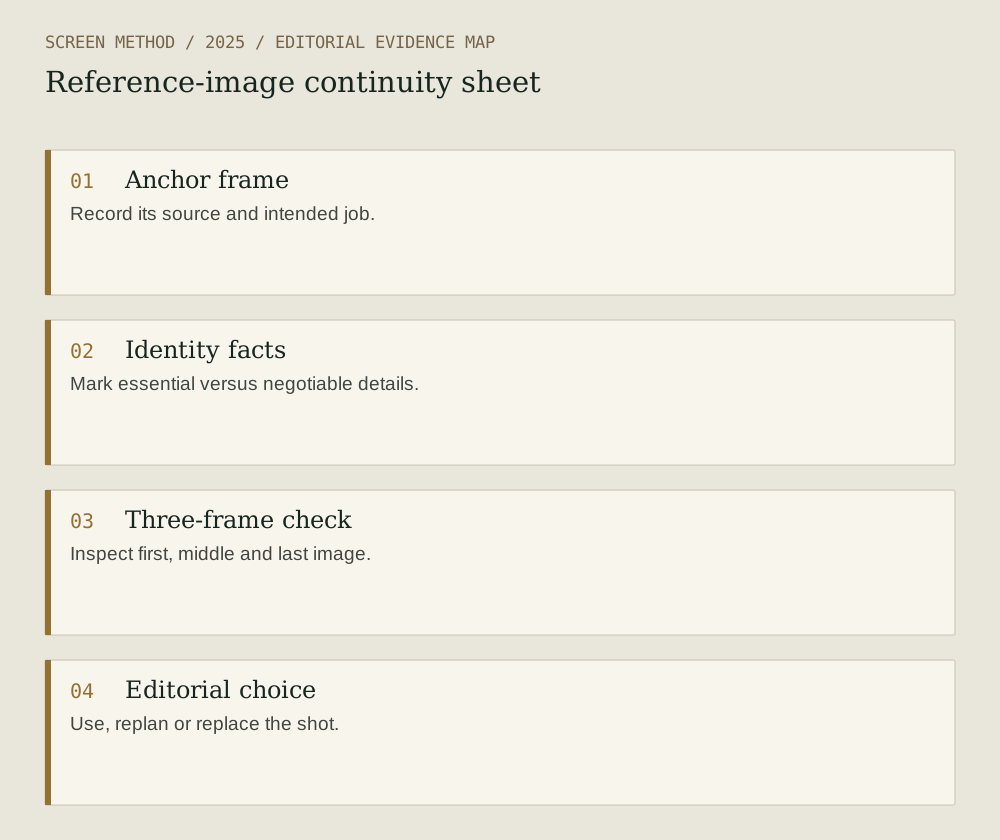
Google’s January update paired reference-image video with native vertical delivery and higher-resolution options. The practical issue is not format alone, but whether the reference has been made stable enough to carry a sequence.
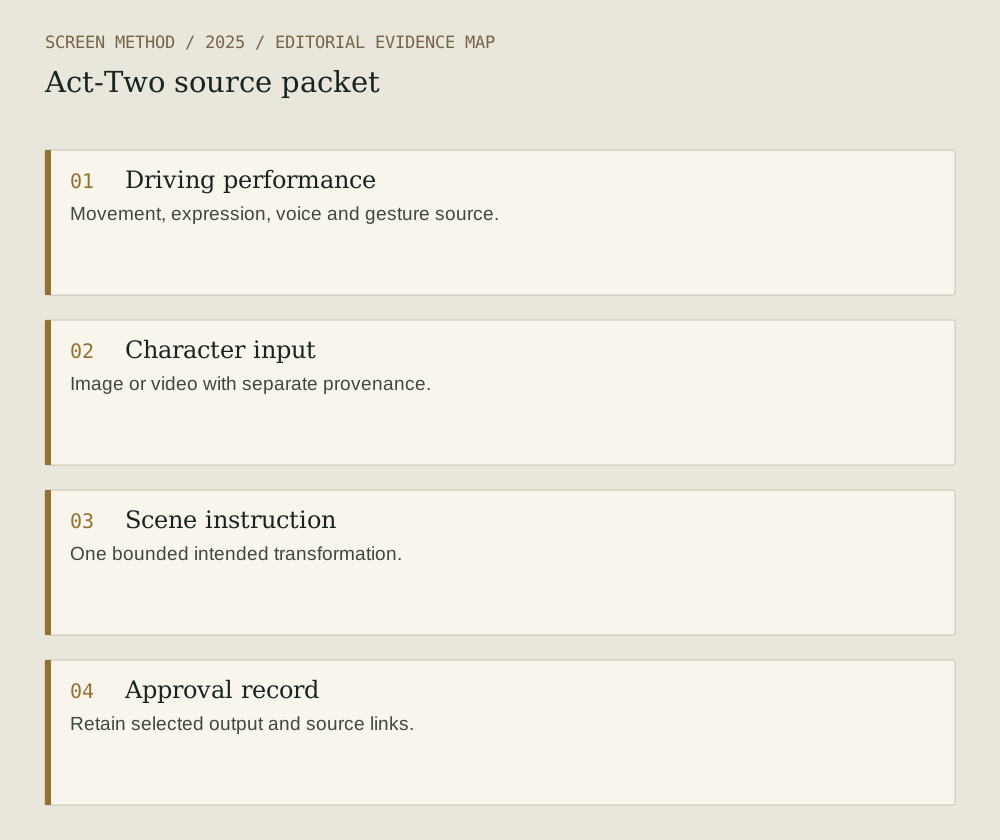
Runway’s Act-Two documentation makes the input performance central. A production needs to make that input traceable before it becomes character animation.
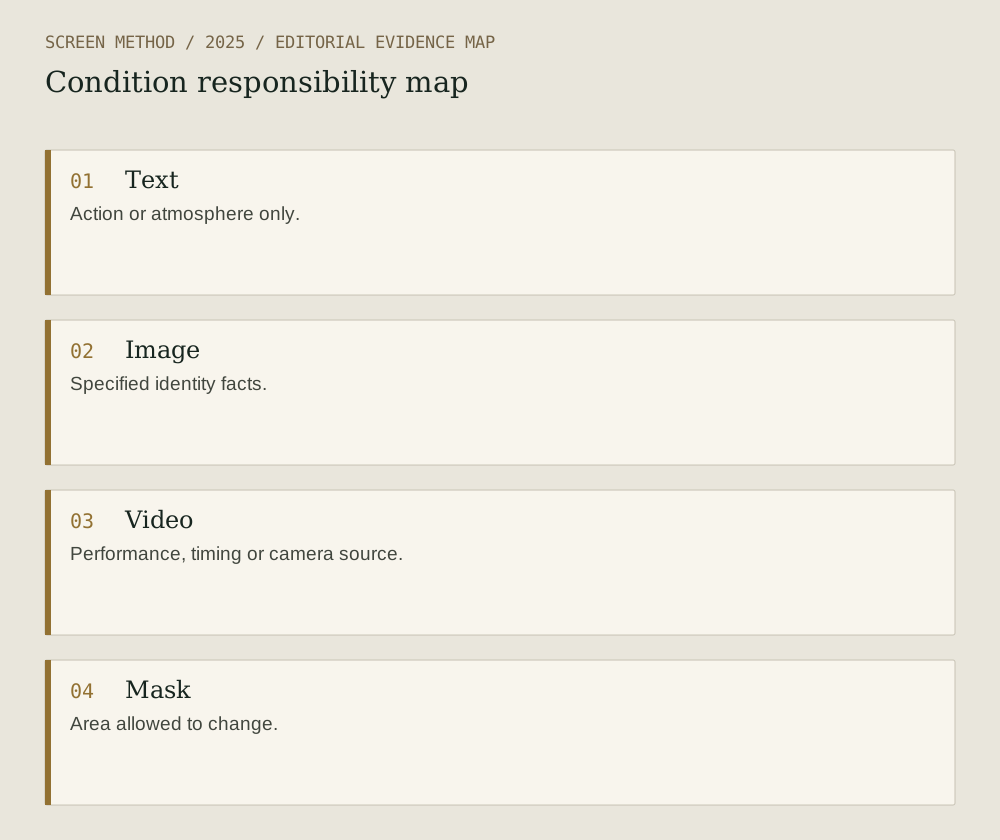
Wan2.1-VACE combined creation and editing tasks in 2025. Its useful production lesson is to label every condition instead of treating inputs as interchangeable inspiration.
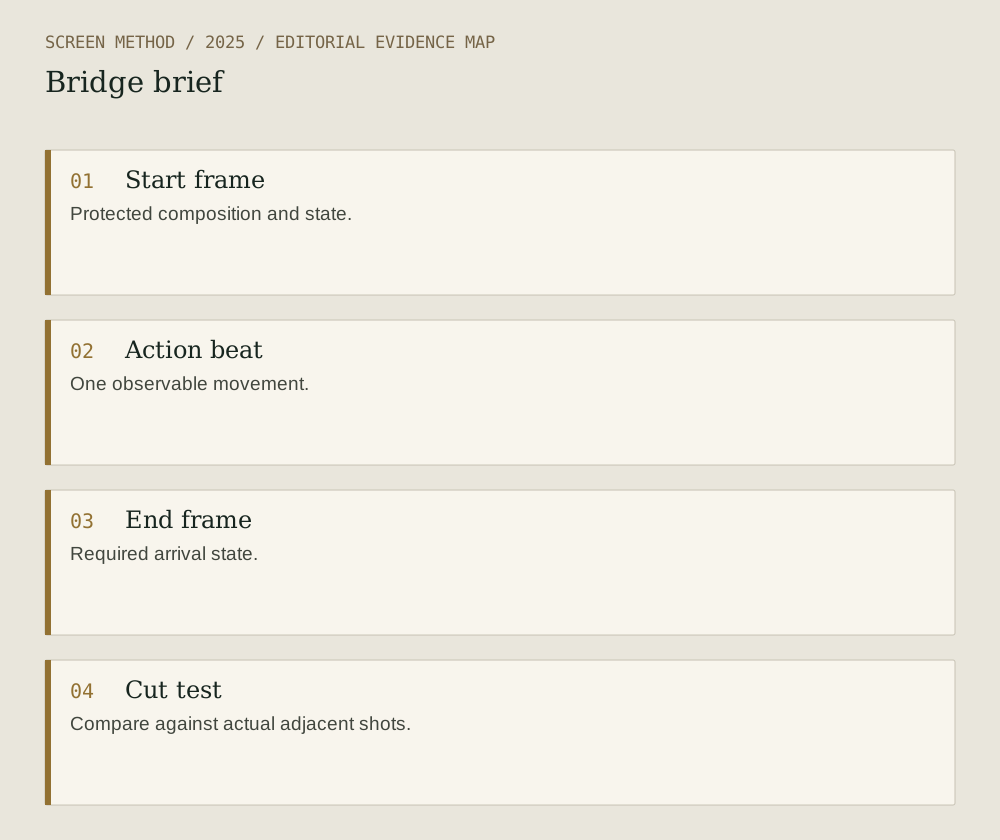
Wan2.1 FLF2V made start and end frames explicit in 2025. The craft question is what the two images establish—and what they leave unresolved between them.
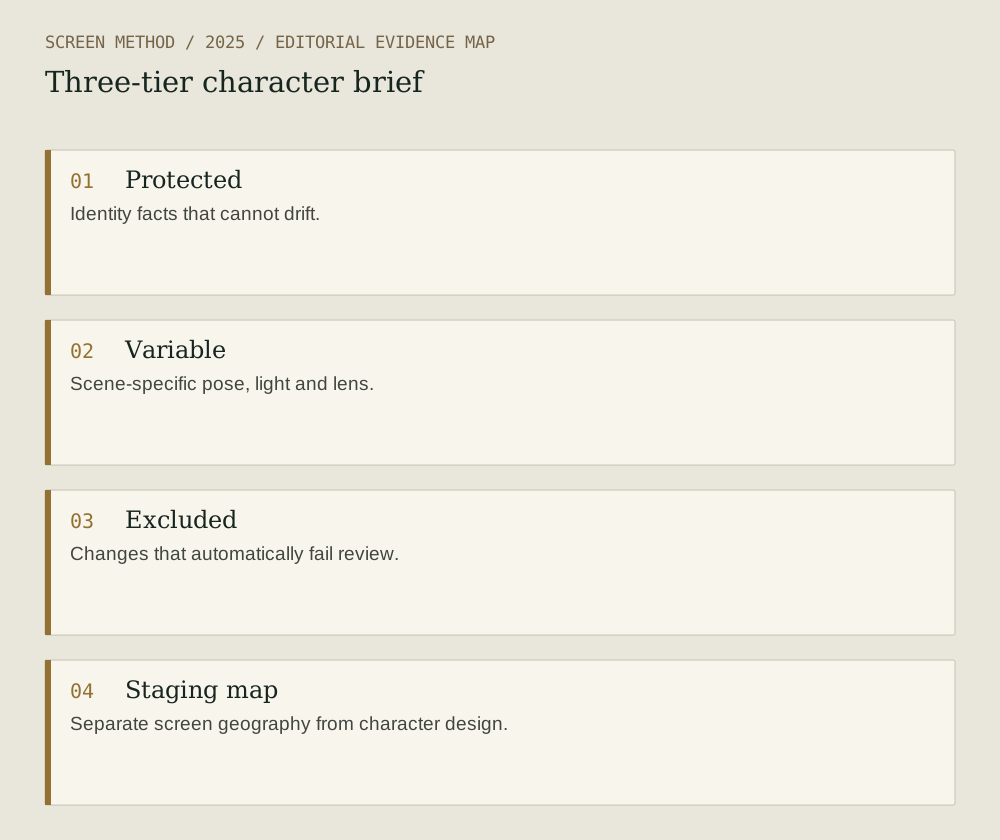
HunyuanCustom’s 2025 paper is a research claim about multimodal conditioning; a filmmaker still has to decide what counts as the same subject in a scene.
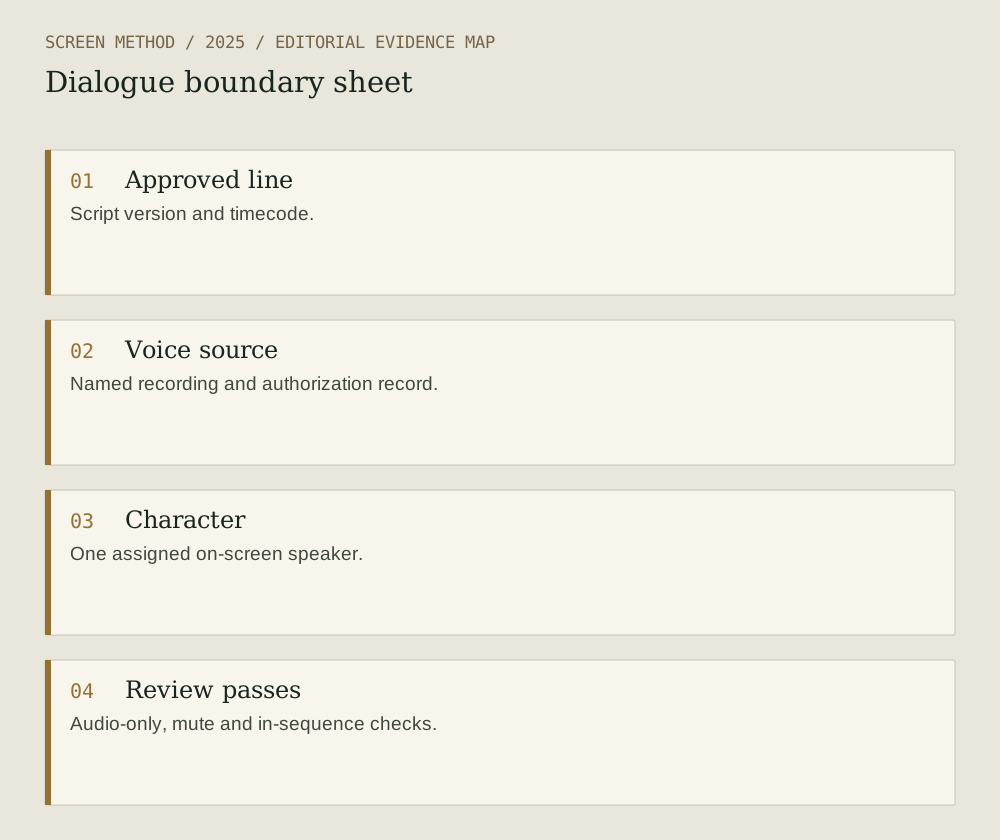
Tencent’s 2025 Avatar paper describes multi-character, audio-driven animation. The responsible craft response is to bound speech, speaker and scene before generation.
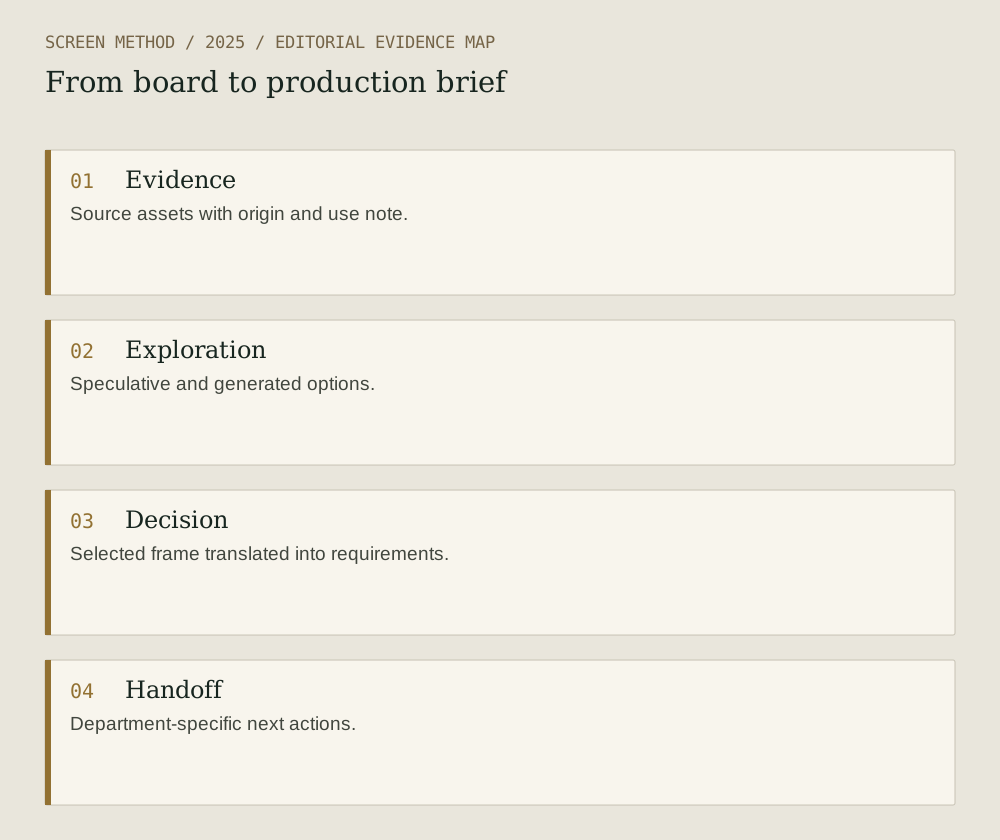
Adobe’s 2025 Firefly Boards launch put collaboration and generation on one canvas. For filmmakers, the board becomes useful when it can be turned into a real brief.
The existing archive follows cinema’s precedents, model releases, post-production, rights and disclosure. Keep the source record beside the creative decision.