
The line is not merely timing data
The HunyuanVideo project records HunyuanVideo-Avatar on 28 May 2025; the associated paper describes an audio-driven, multi-character animation system with emotional control. That framing makes dialogue central, and it is useful to remember what audio carries: words, performance timing, vocal identity, language, accent, emotional intention and sometimes protected personal information. A production should not reduce it to a waveform that can be attached to any face. The research paper describes a model architecture and evaluation, not a universal permission to synthesize a performer’s speech or make a person appear to say new material. [s1][s2][s3] [s1] [s2] [s3]
Create a dialogue boundary sheet before building the character shot. It names the approved script version, speaker, source recording, editor of the line, language, target character, intended emotion, allowed lip-sync range and whether the output is a rehearsal, animatic or delivery candidate. Then state the hard stops: no new words, no speaker substitution, no voice cloning, no change of intent, no use outside the named scene. For a two-person scene, mark each voice track and each face assignment separately, with timecode where the handoff occurs. Build a silent blocking pass first if possible; it exposes screen direction, eyelines and character height without hiding problems under dialogue. Then review the audio-driven pass against the approved script and performance reference. This is an editorial workflow, not a claim that the cited system is suited to every dialogue task. [s1][s2] [s1] [s2]
At the review gate, play the output once without looking at the face to check script, timing and speaker continuity, then once muted to check gestures, eyelines and reaction timing, then in the cut to check the exchange. If a character appears to make a new claim, phrase or emotional turn, treat it as a script and performance change, not a cosmetic defect. Preserve the source recording location, authorization status, script version, input character record, output, generation date and approvals. Do not infer from the word ‘avatar’ that a performance is cleared, or from an academic paper that an output is reliable, licensable or currently available. Screen Method did not test the model or reproduce the paper’s results. The durable craft rule is that a dialogue model needs a dialogue boundary: the line, the speaker, the character and the permitted use must all be legible before a compelling lip-sync makes a decision look settled. [s1] [s2] [s3]
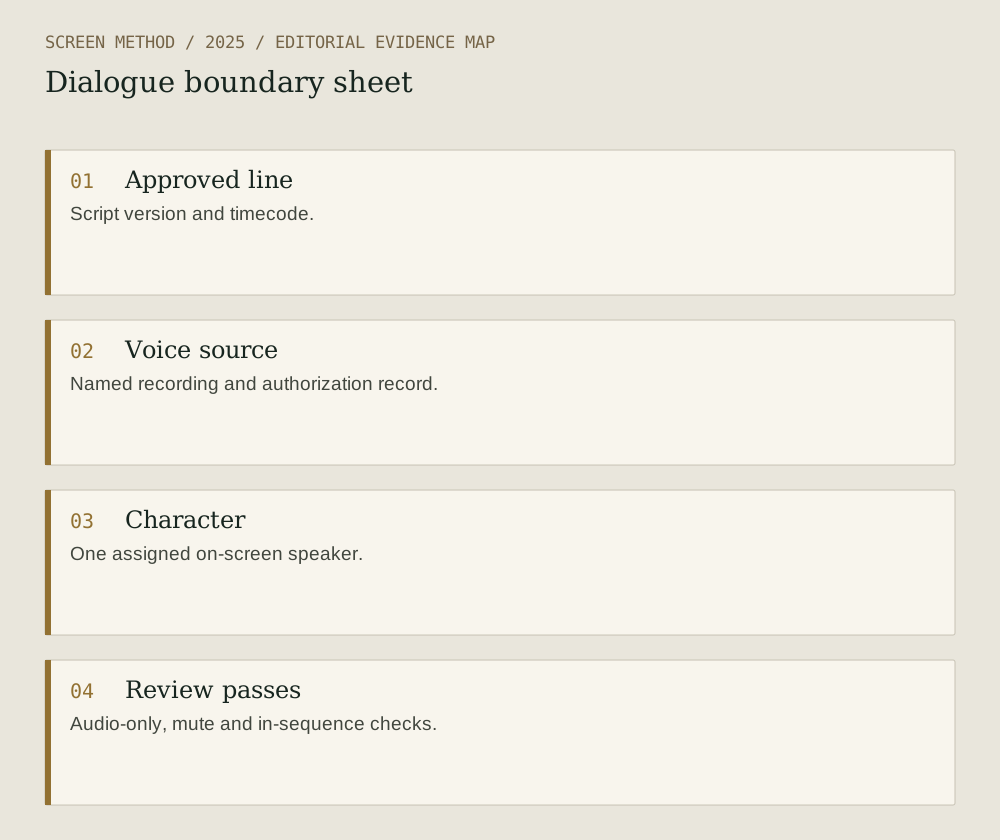
Diagram provenance
Original Screen Method editorial diagram, prepared 2026-09-19 from the cited evidence. This is an explanatory synthesis, not a product interface, documentary image or test result. No third-party artwork copied; no external image permission required for this drawing.
- Approved line Script version and timecode.
- Voice source Named recording and authorization record.
- Character One assigned on-screen speaker.
- Review passes Audio-only, mute and in-sequence checks.
Sources & limits
Not performer-consent, union or legal advice; no independent test.
- Tencent Hunyuan — HunyuanVideo repository
Source date: 2025-05-28. Retrieved 2026-09-19. Avatar release record.
- Tencent Hunyuan — HunyuanVideo-Avatar: High-Fidelity Audio-Driven Human Animation for Multiple Characters
Source date: 2025-05-26. Retrieved 2026-09-19. Research description and stated multi-character scope.
- Tencent Hunyuan — HunyuanVideo technical report
Source date: 2024-12-03. Retrieved 2026-09-19. Underlying model context.
Preparation: 2026-09-19. Site publication: not yet published. Source dates are not publication dates for this article.