
Turn ‘change the shot’ into an edit boundary
Runway introduced Aleph on 25 July 2025 as an in-context video model able, in the provider’s description, to add, remove and transform objects, generate an angle and modify style or lighting. The breadth is exactly why an editor should not brief it with an aesthetic wish alone. ‘Make it rainy’ can touch sky, reflections, exposure, wardrobe color, traffic, timing and the performance. ‘Remove the boom’ can change a face, edge matte or background action. An input video is a specific take, not blank raw material. Start from the locked or near-locked cut and define what the shot is allowed to alter. The 2025 research announcement and later API changelog establish that Aleph was positioned for video transformation; they do not establish that every class of change is reliable in every shot. [s1][s2][s3] [s1] [s2] [s3]
Use a four-field edit decision log: protected elements, permitted change, forbidden changes and acceptance frame. Protected elements might be actor identity, line timing, camera move, product label, door geometry and screen direction. The permitted change is one observable result, such as ‘replace the unbranded cup on the counter with the approved blue prop, keeping its position and hand contact.’ Forbidden changes might include ‘do not alter face, fingers, logo, background extras, color transform or dialogue.’ The acceptance frame says where the reviewer inspects: first contact, closest frame, and final frame. This is not prompt engineering as magic language; it is a shared specification for editor, VFX supervisor, client and approver. Generate a low-risk insert before attempting a hero shot. If the edit needs more than one protected element to be altered, split it into shots or use a conventional compositing plan. [s1][s2] [s1] [s2]
Review at full motion and frame by frame. Compare the original and output in a difference-minded pass: did an intended replacement pull neighboring pixels, change shadows, alter actor timing, invent a cut, or introduce a new continuity obligation? Then put it back in sequence with the preceding and following shots. A locally persuasive transformation can still break a reverse angle or a later close-up. Preserve the original, output, request text, reference assets, result date, selector/version label, reviewer and reasons for rejection. This record supports editorial reversibility; it does not certify authenticity or make a transformed performance cleared. Screen Method did not run a benchmark or accept Runway’s claims as independent proof. We do not make a pricing, quality, rights or current-access claim. The guide is an editorial synthesis of 2025 first-party documentation, designed to make a narrow practical question answerable: what exactly has changed, and who agreed that the rest of the shot could remain untouched? [s1] [s2] [s3]
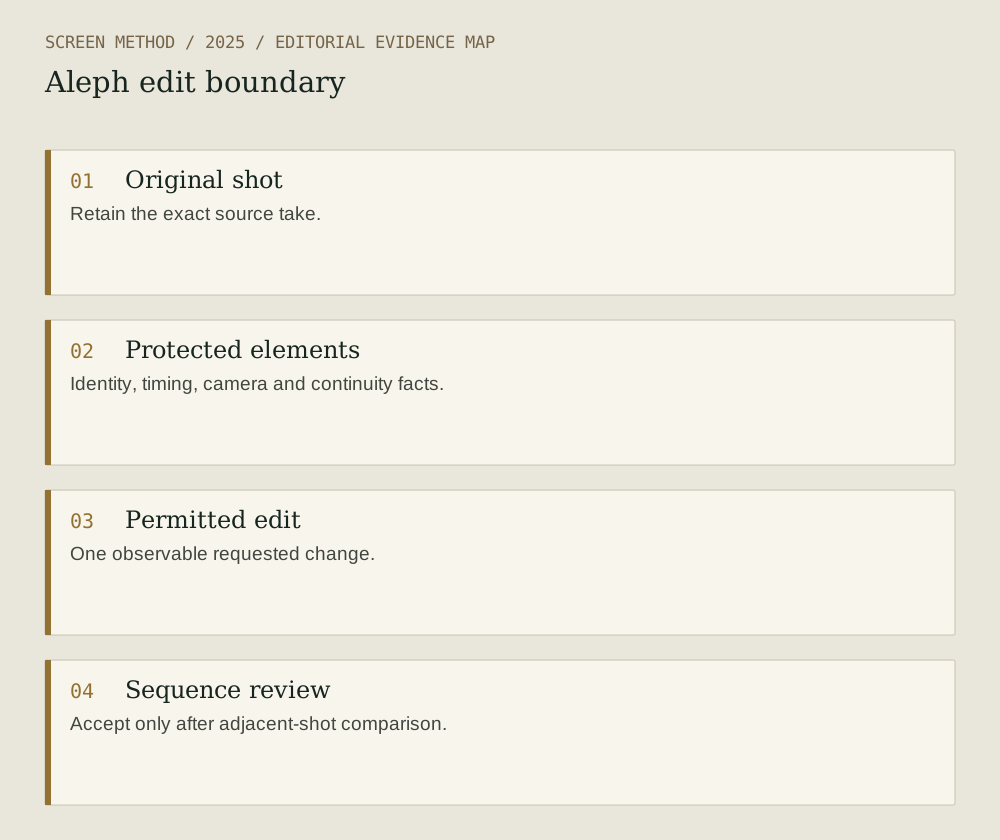
Diagram provenance
Original Screen Method editorial diagram, prepared 2026-09-19 from the cited evidence. This is an explanatory synthesis, not a product interface, documentary image or test result. No third-party artwork copied; no external image permission required for this drawing.
- Original shot Retain the exact source take.
- Protected elements Identity, timing, camera and continuity facts.
- Permitted edit One observable requested change.
- Sequence review Accept only after adjacent-shot comparison.
Sources & limits
No hands-on test or legal clearance conclusion; provider statements are attributed.
- Runway — Introducing Runway Aleph
Source date: 2025-07-25. Retrieved 2026-09-19. Launch date and provider-described transformation scope.
- Runway — Runway product changelog
Source date: 2025-07-31. Retrieved 2026-09-19. Product availability record.
- Runway — Runway Dev API changelog
Source date: 2025-08-01. Retrieved 2026-09-19. API availability record.
Preparation: 2026-09-19. Site publication: not yet published. Source dates are not publication dates for this article.