
Read the correction as production evidence
Tencent’s HunyuanVideo repository records an image-to-video release on 6 March 2025. The I2V repository describes official model definitions, weights and inference code, and its release notes record a 7 March fix for a bug that caused identity changes, advising users to use updated weights for first-frame visual consistency. That is unusually practical source material for filmmakers: even when the intended job is to animate a supplied image, the anchor can drift. The correction does not tell us how often or under what conditions that happens; it does tell us not to treat a single reference image as an enforceable continuity contract. [s1][s2][s3] [s1] [s2] [s3]
Before generation, translate the reference image into a continuity sheet. Divide it into identity facts: face or character silhouette, hair/helmet, costume colors, distinctive marks, prop geometry, environment landmarks, light direction and camera height. Then mark each fact as essential, negotiable or irrelevant for this shot. A close dialogue insert may make eye color and mouth shape essential; a distant back-view shot may not. The sheet should also specify the image’s source and whether the crew is authorized to use it. For a test, use an owned storyboard frame of a courier at a doorway and request only a turn toward camera. Review three stills—first, midpoint and last—against the anchor before evaluating beauty, texture or prompt obedience. The procedure is Screen Method’s editorial synthesis, not a claim that the source project mandates it. [s1][s2] [s1] [s2]
Use failures to improve the shot plan, not to hide them. If the result changes a badge, hand count, doorway shape or screen direction, note which identity fact failed and decide whether a crop, different action or conventional technique better serves the edit. Do not broaden the prompt with every detail as a substitute for a clear reference; a long prompt can obscure which fact needs review. Keep the original anchor, its asset record, chosen model weights or revision if displayed, prompt, generation date and selected output together. HunyuanVideo-I2V’s public repository is not a clearance document, and the cited 2025 materials do not independently establish performance, output ownership, current availability or compatibility. Screen Method has not run the software. The evidence supports a narrow, useful conclusion: the presence of a first-frame fix makes a continuity checklist more—not less—necessary when a reference image carries character identity. [s1] [s2] [s3]
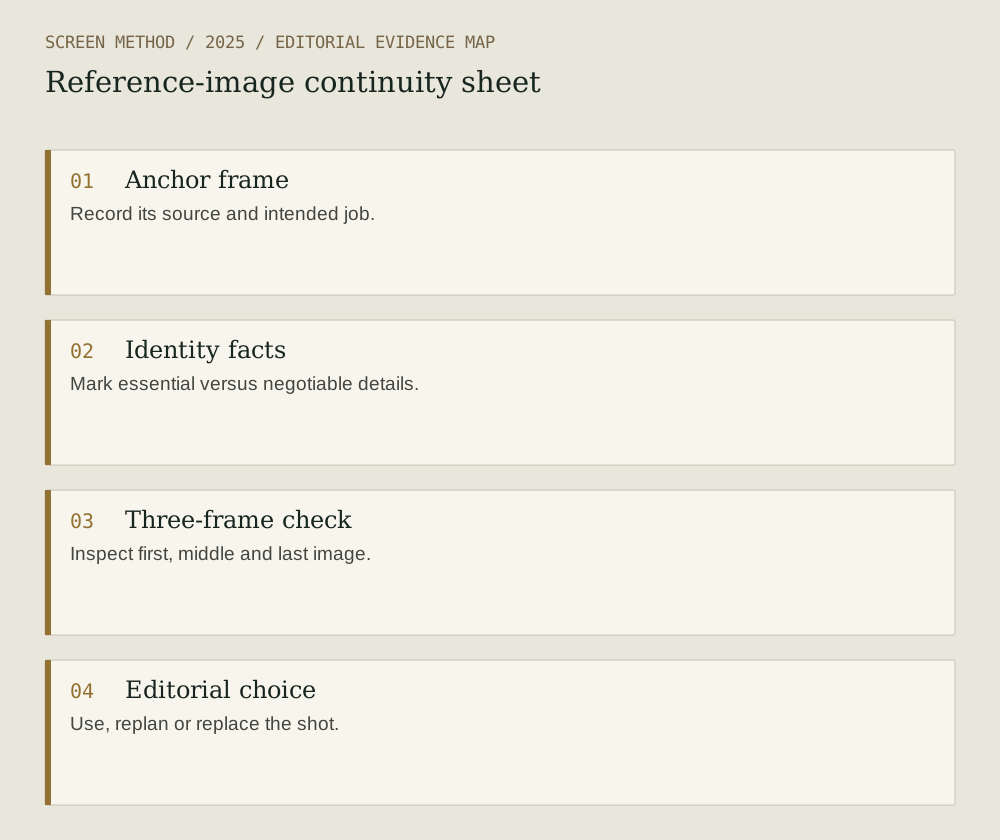
Diagram provenance
Original Screen Method editorial diagram, prepared 2026-09-19 from the cited evidence. This is an explanatory synthesis, not a product interface, documentary image or test result. No third-party artwork copied; no external image permission required for this drawing.
- Anchor frame Record its source and intended job.
- Identity facts Mark essential versus negotiable details.
- Three-frame check Inspect first, middle and last image.
- Editorial choice Use, replan or replace the shot.
Sources & limits
No independent test; the correction is not an estimate of reliability.
- Tencent Hunyuan — HunyuanVideo repository
Source date: 2025-03-06. Retrieved 2026-09-19. I2V release record.
- Tencent Hunyuan — HunyuanVideo-I2V repository
Source date: 2025-03-07. Retrieved 2026-09-19. Official code record and identity-change correction.
- Tencent Hunyuan — HunyuanVideo technical report
Source date: 2024-12-03. Retrieved 2026-09-19. Base model research context.
Preparation: 2026-09-19. Site publication: not yet published. Source dates are not publication dates for this article.