
Separate inspiration from instruction
Adobe introduced Firefly Boards in April 2025 as a multi-player, generative-first concept-development canvas, naming mood boarding, storyboarding and collaborative brainstorming as uses. Its June update said users could toggle labelled models on the canvas. That is a meaningful production change because a board can now contain imported references, generated variants, client comments and model-labelled material side by side. But a board is not automatically a shooting brief. A compelling image may be there only to discuss palette, while another may be a proposed composition; if those roles are not tagged, a crew can mistake mood for approved direction. [s1][s2][s3] [s1] [s2] [s3]
Build each board around three lanes: evidence, exploration and decision. Evidence holds source photos, location recce frames, owned sketches, approved product assets and documents—with origin and use note. Exploration holds generated options and deliberately speculative references, each marked as such and labelled with the visible model or process where known. Decision contains the selected frame plus a caption that converts it into work: intended shot size, movement, set or location requirement, cast/prop implication, grade note and what remains undecided. A director can then ask a productive question: is this blue corridor an actual build requirement, a lighting reference, or only a feeling? If it is a build requirement, move it to decision and assign an owner; if not, keep it in exploration. [s1][s2] [s1] [s2]
At lock, export or preserve a dated decision sheet rather than assuming the live board will remain self-explanatory. It should identify selected frames, source links, model labels, contributors, approval status and notes for art, camera, VFX and editorial. Use a separate rights ledger for material that is not original or not yet cleared. No Adobe announcement turns external images into released assets, and a label does not verify every fact in an image. Screen Method did not use Firefly Boards, independently assess model output, or endorse a particular commercial use. This is an editorial synthesis of Adobe’s 2025 descriptions. Its practical aim is to retain the useful speed of visual exploration while keeping a traceable step between ‘we like this’ and ‘this is what the next department is being asked to make.’ [s1] [s2] [s3]
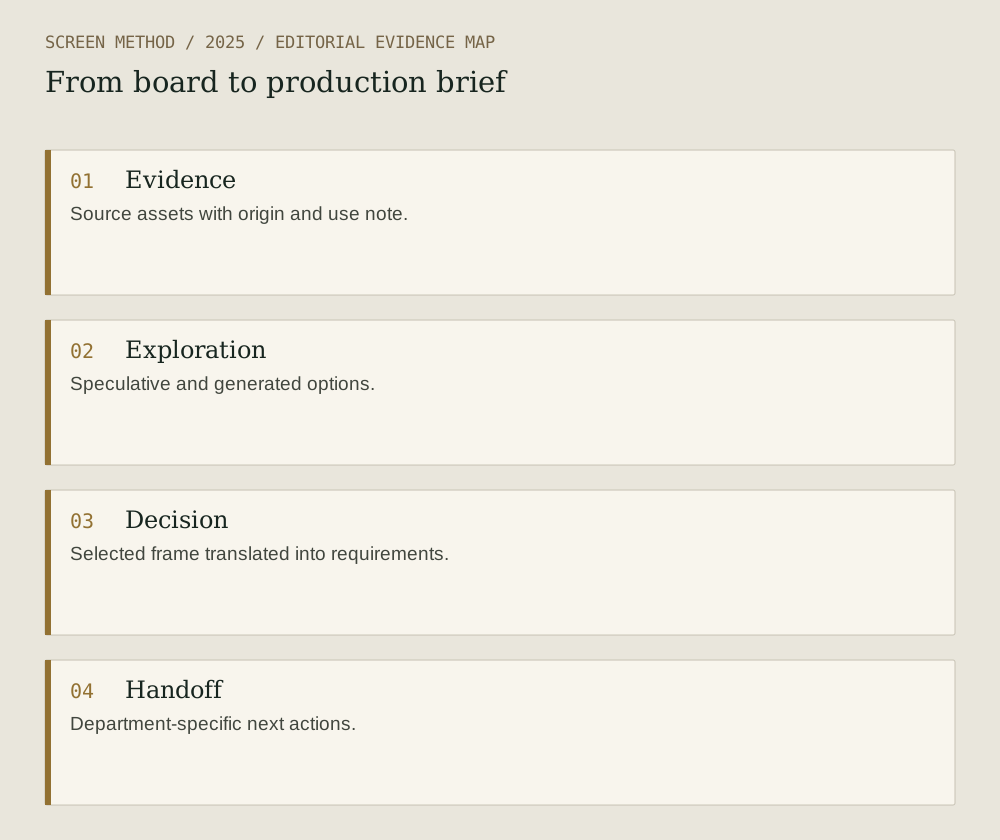
Diagram provenance
Original Screen Method editorial diagram, prepared 2026-09-19 from the cited evidence. This is an explanatory synthesis, not a product interface, documentary image or test result. No third-party artwork copied; no external image permission required for this drawing.
- Evidence Source assets with origin and use note.
- Exploration Speculative and generated options.
- Decision Selected frame translated into requirements.
- Handoff Department-specific next actions.
Sources & limits
No hands-on use, rights clearance or claim that generated material is production-approved.
- Adobe — Adobe Firefly: The next evolution of creative AI is here
Source date: 2025-04-24. Retrieved 2026-09-19. Boards beta and stated concept-development uses.
- Adobe — Ideate and create faster with new Creative Cloud and Firefly innovations
Source date: 2025-06-17. Retrieved 2026-09-19. Canvas model labels and collaboration description.
- Adobe — Firefly Boards documentation
Source publication date not established. Retrieved 2026-09-19. Official product documentation.
Preparation: 2026-09-19. Site publication: not yet published. Source dates are not publication dates for this article.