
Inputs do different editorial jobs
Alibaba’s May 2025 announcement describes Wan2.1-VACE as a unified model for creation and editing with text, image, video and mask inputs; the project repository records its release with inference code, weights and technical report. A unified interface can be valuable, but it can also conceal a vital preproduction question: which input is carrying which fact? A text prompt may define an action or tone. A reference image may carry costume or palette. Source video may carry performance, timing or camera motion. A mask may define the area that is allowed to change. Calling all four ‘references’ makes review impossible. [s1][s2][s3] [s1] [s2] [s3]
Create a condition map for every proposed shot. Put the shot ID at the top, then list each supplied asset with a single intended responsibility: ‘video A controls hand movement’; ‘image B controls the blue can’s label placement’; ‘text controls dusk atmosphere’; ‘mask C permits sky replacement only.’ Beside each, record origin, owner or author, intended use, allowed transformation and the reviewer who can approve it. Then write the inverse: what the condition must not authorize. A source performance video does not automatically authorize a likeness change. A product still does not authorize a new slogan. A mood-board image does not promise a composition will remain intact. In a straightforward insert, use the fewest conditions capable of communicating the task, because every added asset makes it harder to identify why a result drifted. This is editorial synthesis, not a claim about VACE’s internal behavior. [s1][s2] [s1] [s2]
Review in condition order. First, inspect whether the output respected the protected source-video timing. Next, inspect the masked boundary and any unexpected change outside it. Then compare the reference-controlled identity facts—costume, object geometry, location—to the source assets. Last, watch the shot in the cut for direction, grade and sound rhythm. Keep a contact sheet with the four input types next to the chosen output so a post supervisor can see the claimed purpose of each. The model’s multi-task scope should not turn a correction into an opaque operation. Do not claim that VACE preserves all conditions, that it is a replacement for roto or compositing, or that output rights follow automatically from weights being public. We did not install or test it. This 2025 retrospective uses primary release material to propose a simple accountability tool: each input gets a declared job, a declared boundary and a person responsible for it. [s1] [s2] [s3]
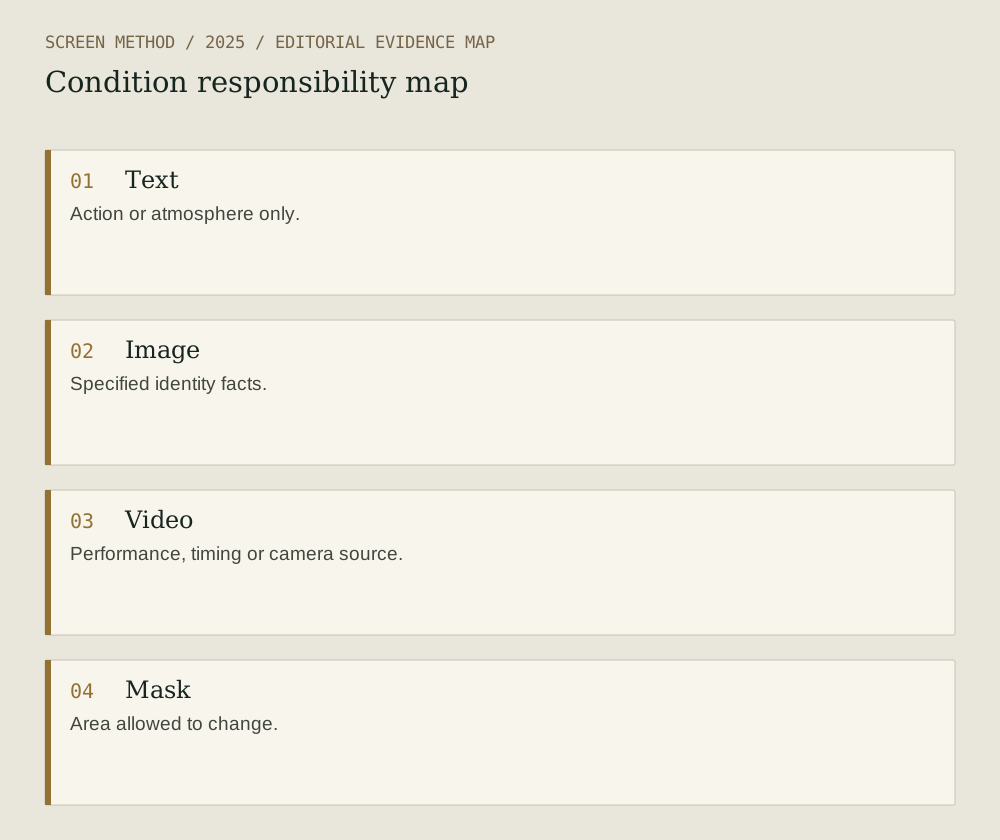
Diagram provenance
Original Screen Method editorial diagram, prepared 2026-09-19 from the cited evidence. This is an explanatory synthesis, not a product interface, documentary image or test result. No third-party artwork copied; no external image permission required for this drawing.
- Text Action or atmosphere only.
- Image Specified identity facts.
- Video Performance, timing or camera source.
- Mask Area allowed to change.
Sources & limits
Provider and project sources; no independent implementation or output test.
- Alibaba Cloud — Alibaba introduces open-source model for video creation and editing
Source date: 2025-05-15. Retrieved 2026-09-19. VACE announcement and stated input/task scope.
- Alibaba Wan Team — Wan2.1 repository
Source date: 2025-05-14. Retrieved 2026-09-19. Release log and links to code, weights and report.
- Alibaba Wan Team — Wan-VACE technical report
Source date: 2025-05-27. Retrieved 2026-09-19. Research description of unified conditions.
Preparation: 2026-09-19. Site publication: not yet published. Source dates are not publication dates for this article.