
Name the two inputs honestly
Runway’s 2025 Act-Two release describes a workflow with two inputs: a driving performance video and a character image or video. Its help page says the performance supplies movement, expressions, audio and gestures; when the character input is an image, gesture control is available, while a character-video input retains its original subject, environment and camera motion and limits control to facial movement and expression. Those distinctions are enough to change a call sheet. The driving clip is not merely a technical upload. It records a person’s performance, and it may include voice, gestures, timing, wardrobe, background information and an identifiable likeness. The character asset may have its own author, performer, client, location and license history. Treat each as a separate source record before making a generation request. [s1][s2][s3] [s1] [s2] [s3]
Screen Method’s editorial synthesis is a two-column performance packet. The left column describes the driving performance: performer or authorized source, date, project, intended transformation, whether speech is present, duration, allowed territory and any expiry or approval condition. The right column describes the character input: asset owner, reference type, prompt or asset ID, intended scene, whether it depicts a real person, and what parts must not change. Add a third line for the proposed output: one scene, one character, one intended use. A practical test is a puppet close-up: capture an actor delivering one line with a specified head turn, pair it with an original illustrated character, and review the output only for timing and silhouette. That example avoids treating an unbounded library of performances as generic training or reuse material. It also gives the director a chance to reject a result that adds movement or environmental motion inconsistent with the planned shot. [s1][s2] [s1] [s2]
At picture lock, retain the driving file’s hash or storage path, the character-source record, generation date, visible tool label, selected output, and the approval of the people who need to approve it. That record is not a substitute for an agreement, union rule, clearance or consent; it is a way to avoid losing the chain of decisions. Do not assume that uploading a performance grants permission to transform it, that a character reference clears a likeness, or that a provider’s published feature page resolves employment terms. Also do not infer that Act-Two’s published resolutions, duration or credit information remains current. This retrospective reads what Runway documented in 2025 and turns it into a conservative preflight checklist. It does not claim that Screen Method tested the tool, that every generation preserves performance accurately, or that the workflow is appropriate for every jurisdiction or contract. When the performance is identifiable or paid, pause for the production’s authorized legal and labor review before generation. [s1] [s2] [s3]
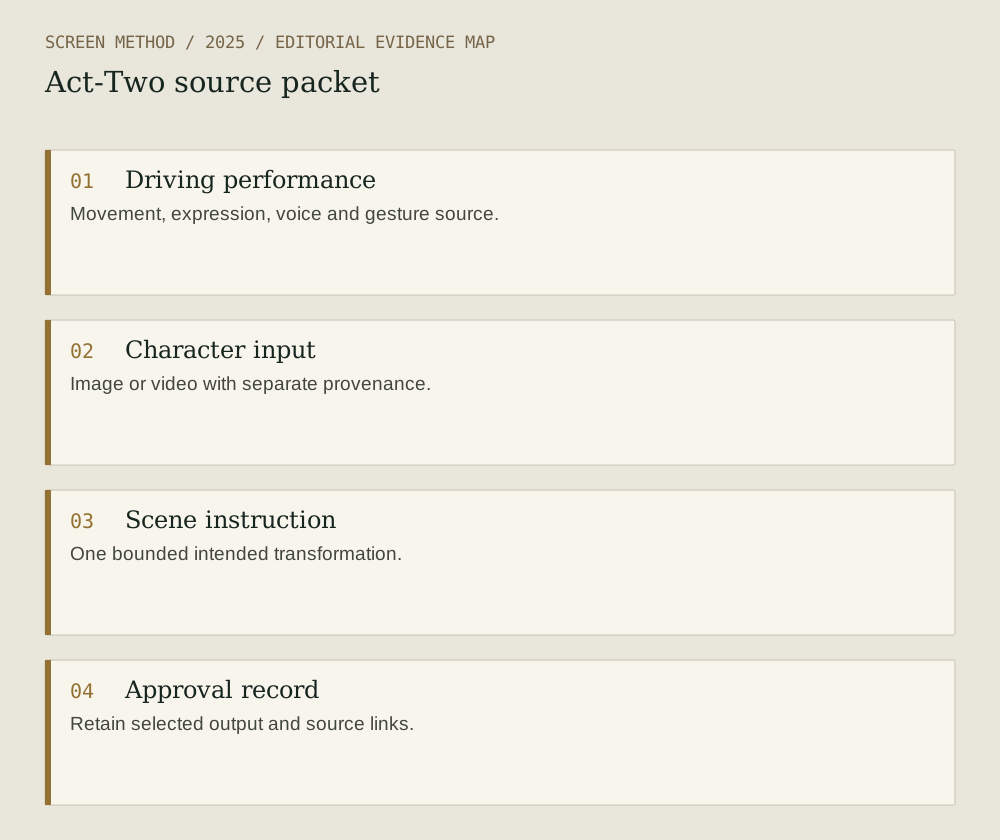
Diagram provenance
Original Screen Method editorial diagram, prepared 2026-09-19 from the cited evidence. This is an explanatory synthesis, not a product interface, documentary image or test result. No third-party artwork copied; no external image permission required for this drawing.
- Driving performance Movement, expression, voice and gesture source.
- Character input Image or video with separate provenance.
- Scene instruction One bounded intended transformation.
- Approval record Retain selected output and source links.
Sources & limits
Not legal, labor or clearance advice; provider documentation only.
- Runway — Performance Capture with Act-Two
Source publication date not established. Retrieved 2026-09-19. Input types, motion behavior and published specifications.
- Runway — Runway product changelog
Source date: 2025-07-17. Retrieved 2026-09-19. 2025 Act-Two release timing and product description.
- Runway — Runway Dev API changelog
Source date: 2025-07-21. Retrieved 2026-09-19. Documented 2025 API availability.
Preparation: 2026-09-19. Site publication: not yet published. Source dates are not publication dates for this article.