
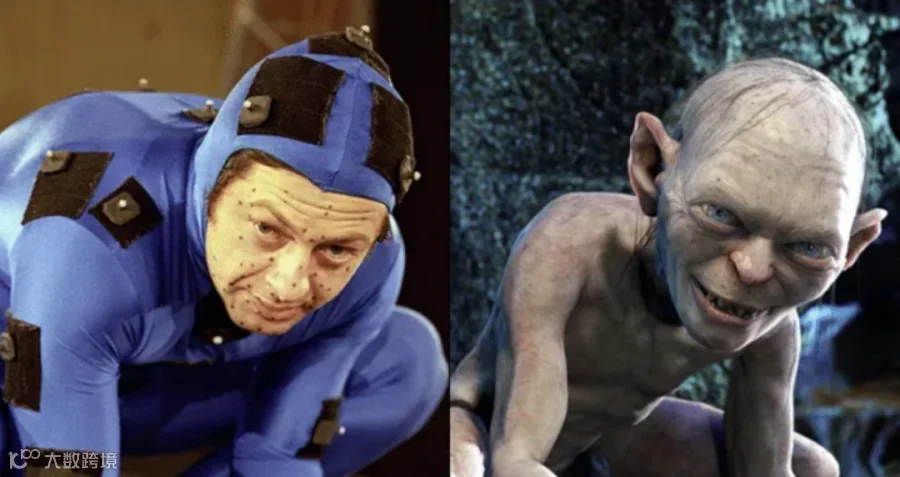
The shot
The Lord of the Rings: The Two Towers (2002) introduced a fully computer-generated Gollum built from actor Andy Serkis's on-set motion performance. Weta's own current materials still describe the studio as 'known for performance-driven animated creatures and characters such as Gollum,' and the film itself is credited on that same page as a Weta production, one of the studio's earliest signature characters.
What the documents show
The Academy's own record of the 75th Academy Awards lists the Visual Effects Oscar for The Two Towers as going to Jim Rygiel, Joe Letteri, Randall William Cook and Alex Funke — a verified production credit naming an animation director (Cook) alongside visual-effects supervisors, not a single technologist. A January 2022 profile of Cook in the trade magazine VFX Voice independently confirms his award history across the trilogy and captions a production photo of 'Cook and motion capture actor Andy Serkis reviewing a scene' for this film, corroborating that Serkis's performance was captured and reviewed as reference material rather than produced by the animation team alone.
The workflow
The documents available describe a pipeline built around Serkis's on-set motion performance, played against the other actors during filming, which animators then used as reference and driving data for the digital character's movement. Cook's Oscar credit as animation director indicates a hand-animation and direction layer sat between Serkis's captured performance and the final rendered character; the VFX Voice profile's description of Cook and Serkis reviewing footage together points to an iterative process rather than a one-step capture-to-screen pipeline.
What the tool does not change
None of these sources describe Gollum as generated without an actor's performance as its basis, and the Academy's own award explicitly credits an animation director's name alongside the visual-effects supervisors, indicating a human judgment layer over whatever the capture technology recorded. The character's voice, delivered separately by Serkis, and the review process VFX Voice's caption implies both point to continued human authorship over what the raw capture produced.
- Whose on-set performance is a generated or capture-driven character actually built from, and is that performer credited?
- Does an animation-director credit appear alongside a technical one, indicating a review and adjustment layer over raw capture data?
- What does the studio's own account claim the technology replaced, versus what it says the technology assisted?
Gollum's most durable lesson is in the award's own credit line: a mocap actor's name does not appear on the Visual Effects Oscar, but an animation director's does, alongside three visual-effects supervisors — a reminder that a captured performance still passed through a credited chain of human judgment before it reached the screen.
Sources & reading trail
The Academy's own record naming Rygiel, Letteri, Cook and Funke for the film's Visual Effects Oscar.
Source published: Not established · Retrieved: 16 September 2026
Trade profile of Cook confirming his award history and captioning his work reviewing footage with motion-capture actor Andy Serkis on this film.
Source published: 10 January 2022 · Retrieved: 16 September 2026
Weta's own current materials naming Gollum as a signature performance-driven character associated with the studio.
Source published: Not established · Retrieved: 16 September 2026
Documentation, agreements and rulings establish the note; the workflow reading is Screen Method editorial analysis. This retrospective draft does not imply the site published on the event date.