
The shot
On 22 October 2024, Runway introduced Act-One, describing it in its own research announcement as a feature that generates character animation "using video and voice performances as inputs," built to work "within Gen-3 Alpha." The company positions it explicitly as a previsualization and performance tool: Runway states the pipeline is "driven directly and only by a performance of an actor and requiring no extra equipment," not a system that produces a finished broadcast shot on its own. Act-One runs on Gen-3 Alpha, the base model Runway's own Gen-3 Alpha announcement, published 17 June 2024, states "excels at generating expressive AI human characters with a wide range of actions, gestures and emotions."
What the documents show
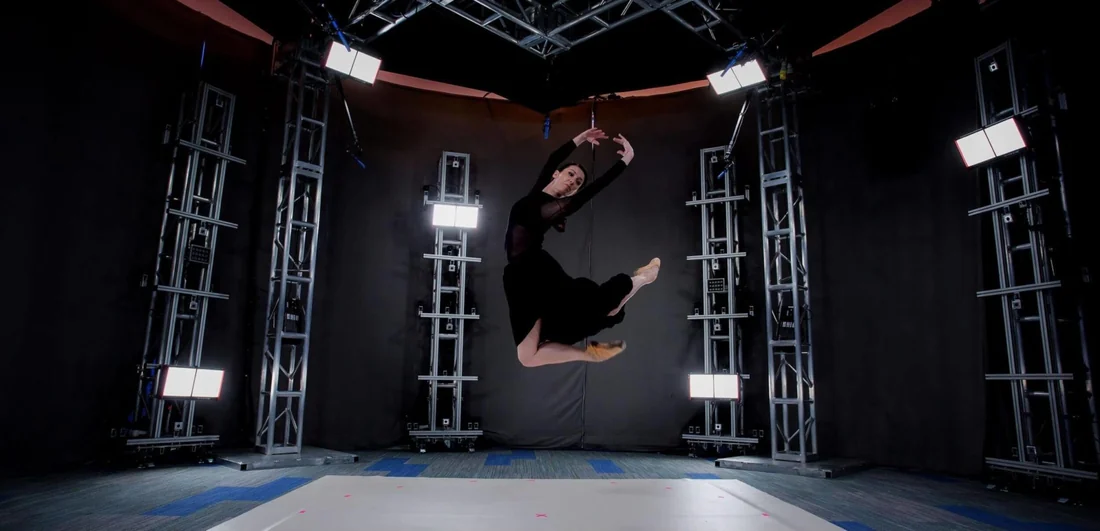
Runway's announcement states Act-One takes an actor's recorded performance, filmed with "nothing more than a consumer grade camera," and voice as inputs, and outputs a character animation that "preserves realistic facial expressions and accurately translates performances into characters with proportions different from the original source video." Named capabilities include capturing "eye-lines, micro expressions, pacing and delivery" and supporting "multi-turn dialogue scenes with single actors playing multiple characters." This is the vendor's own promotional demonstration; Runway names no independent evaluation of the output's fidelity, and the expression-accuracy claims are the company's characterization rather than a third-party test. The announcement contrasts this with traditional pipelines, which it says require "motion capture equipment, multiple footage references, manual face rigging, among other techniques."
The workflow
The documented input path is an actor's recorded performance plus voice, requiring no rig or reference markers, fed into the Gen-3 Alpha system to produce an animated character performance. Runway states the tool works "across varied character designs and camera angles," meaning one captured performance can map onto differently proportioned characters rather than needing a matched rig each time. The announcement frames this as suited to previsualization: testing blocking, dialogue timing, and acting choices before a final production pipeline, not replacing the finishing steps a traditional VFX or animation process would still apply.
What the tool does not change
Runway's own framing is explicit that Act-One "translates performances into characters," meaning the actor's performance remains the source material the system carries forward, not a performance the system invents. The announcement also names safety measures, "public figure detection, voice verification protocols, and continuous monitoring for misuse," layered on top of the "in-house visual moderation system" and "C2PA provenance standards" the Gen-3 Alpha announcement states for the base model, indicating that consent and identity questions remain governed by policy controls Runway built around the tool, not resolved by generation itself.
- Is a claim about Act-One's fidelity sourced to Runway's own announcement, or to an independently documented production use?
- Does the stated input requirement, a real actor's recorded performance and voice, match how a project intends to use the tool?
- What do Runway's safety measures state about consent when an actor's likeness or voice is captured for this pipeline?
Act-One is documented as a previsualization tool whose central claim, replacing rig-based capture with an ordinary camera and an actor's performance, is Runway's own account rather than an independently verified production result.
Sources & reading trail
Runway's own research announcement stating Act-One's inputs, outputs, positioning versus traditional motion capture, and named safety measures.
Source published: 22 October 2024 · Retrieved: 16 September 2026
Runway's own announcement of the Gen-3 Alpha base model Act-One runs within, including its character-generation capability and moderation system.
Source published: 17 June 2024 · Retrieved: 16 September 2026
Documentation, agreements and rulings establish the note; the workflow reading is Screen Method editorial analysis. This retrospective draft does not imply the site published on the event date.