
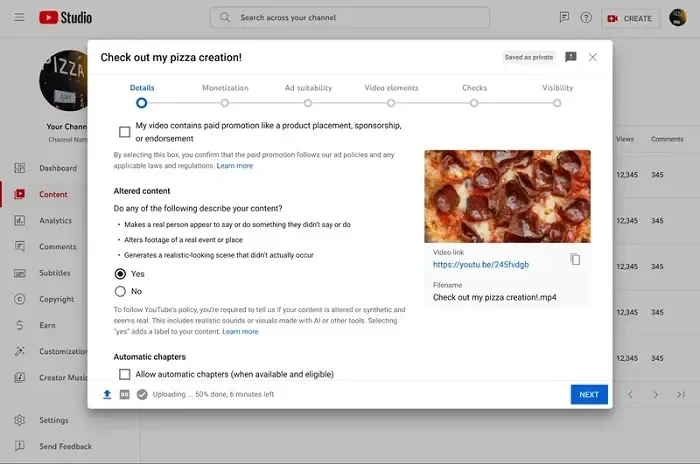
The shot
A creator uploads a video that shows a real place altered beyond recognition, or a scene depicting an event that never happened, or a public figure appearing to say something they did not say. YouTube's own help-center policy on disclosing altered or synthetic content, current as retrieved 16 September 2026, requires a disclosure label in that situation. The policy traces back to a dated announcement: YouTube's blog post on responsible AI innovation, published 14 November 2023, first set out the plan to require creators to flag realistic altered or synthetic material.
What the documents show
The help-center article names three triggers: making a real person appear to say or do something they did not, altering footage of a real event or place, and generating a realistic scene that never occurred. It also names what is exempt: clearly unrealistic content such as a fantastical scene, and minor edits like beauty filters, color adjustment, or cloning a creator's own voice. This is YouTube's own account of its policy, not an independently audited enforcement record, and it applies only to content the policy itself calls realistic. The 2023 blog post adds the original design: a label in the video description for altered or synthetic content generally, and a more prominent label placed in the player itself for sensitive subjects such as elections, conflict, public health, or public officials. Consistent failure to disclose, per the help-center page, can lead to a manually applied label or penalties including content removal or suspension from the YouTube Partner Program.
The workflow
For a creator finishing a piece that used a generative video tool on a real subject, the practical step is a self-assessment against the three named triggers before upload, then selecting the disclosure option YouTube's upload flow provides. For photorealistic material the platform places the label directly on the video itself; for non-photorealistic or clearly animated AI content, the label sits in the expanded description instead, per the help-center article. A newsroom or studio channel handling a sensitive topic would additionally weigh the player-level label the 2023 announcement describes for elections, conflict, and health content.
What the tool does not change
The label is a disclosure mechanism, not a verification system. Nothing in either document claims YouTube independently confirms whether an undisclosed video is synthetic; the policy relies on creator self-disclosure backed by after-the-fact enforcement. The judgment about whether a given edit crosses from a minor adjustment into a disclosure-triggering alteration remains the creator's to make first.
- Does this edit fall inside the three disclosure triggers, or the exemptions for minor edits and unrealistic content?
- Does the finished video's realism level call for a description-panel label or a more visible player label?
- What does the channel's own review process do to check a disclosure decision before publishing, rather than after a complaint?
YouTube's rule shifts the first disclosure decision onto the creator, with the platform's own account of the consequences for skipping it, rather than resolving the underlying question of what counts as realistic.
Sources & reading trail
States the three disclosure triggers, exemptions, label placement, and enforcement consequences.
Source published: Not established · Retrieved: 16 September 2026
Announces the original disclosure requirement and the two-tier label design for description panel versus player.
Source published: 14 November 2023 · Retrieved: 16 September 2026
Documentation, agreements and rulings establish the note; the workflow reading is Screen Method editorial analysis. This retrospective draft does not imply the site published on the event date.