
The shot
ElevenLabs, a voice-AI company, launched an automatic dubbing tool in October 2023 that translates a video or audio file's dialogue into another language while attempting to preserve the original speaker's voice, rather than replacing it with a generic narrator. The company's own blog post, published 23 January 2024 to introduce a follow-on editing feature, describes the earlier launch directly: last October the company launched the AI Dubbing tool, enabling automatic, end-to-end video translation across 29 languages. The tool sits at the finishing stage, applied after picture is locked, as a localization step rather than a production-time recording.
What the documents show
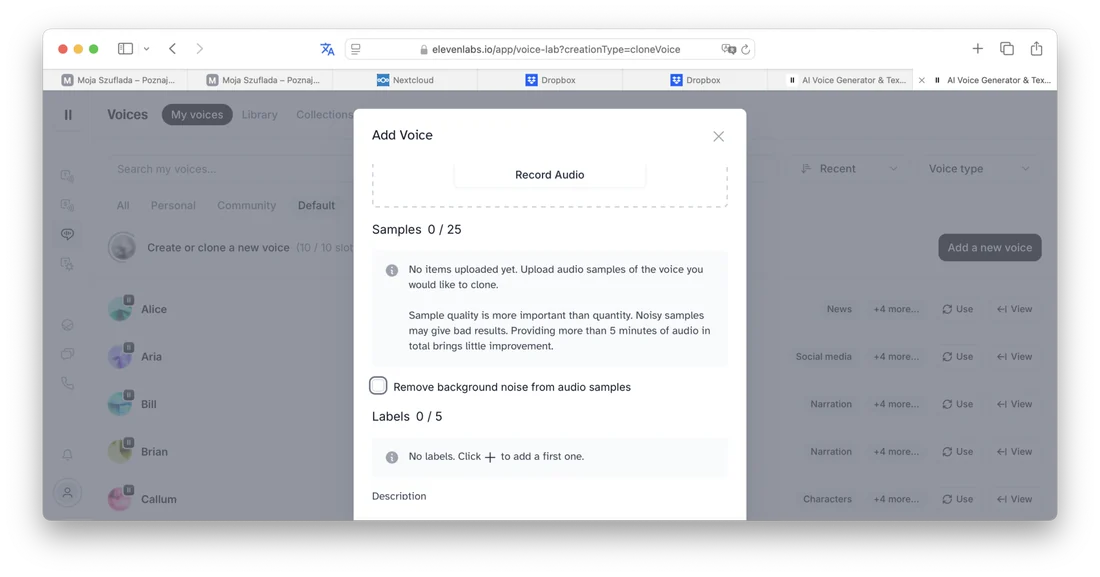
ElevenLabs' current help documentation, retrieved 16 September 2026, states its present model, Dubbing v2, now supports more than ninety languages and runs fully automatically, with no option to edit the content, and uploads capped at 2 gigabytes and 180 minutes on the website. An older model, v1, is kept available because it can feed an editable Dubbing Studio project, which the documentation notes is in maintenance mode and receives critical bug fixes only, the company's own signal about which version it actively develops. On voice cloning, a separate article states a stricter rule than marketing language alone would suggest: a user can only clone their own voice, and even with someone's consent cannot clone another person's, a rule enforced by verifying the voice belongs to the account holder. Whether that rule governs the voices Dubbing automatically clones from an uploaded video is not stated in the documentation reviewed.
The workflow
An editor uploads a locked video or audio file, or pastes a URL from a supported platform, selects target languages, and receives translated, resynthesized dialogue in a voice cloned from the original speaker, preserving identity, pitch, and tonality. The company states the process conditions on the source performance rather than a transcript, which it says helps carry tone and delivery across languages. A production wanting to edit the resulting transcript or timing by hand must instead select the older v1 model to create a Dubbing Studio project.
What the tool does not change
The documentation does not state that automatic dubbing removes the need for a human review pass on timing, translation accuracy, or performance fit; the separate, editable Dubbing Studio path is itself evidence that ElevenLabs expects some projects to need hands-on correction. Nor does the reviewed documentation describe a consent workflow for the voices captured inside an uploaded video, distinct from the stricter, verification-based rule governing a user's own Professional Voice Clone.
- Does this production have documented permission from every speaker whose voice the dubbing tool will clone?
- Would the automatic v2 model's fixed output, or the editable v1-based Dubbing Studio project, better fit this delivery's review requirements?
- Is the target language actually among the more than ninety the current documentation lists?
ElevenLabs documents a clear technical boundary around who may create a Professional Voice Clone, and a separate, less detailed description of how Dubbing itself handles the voices in an uploaded file. That gap is worth confirming directly with the company before relying on consent being handled automatically.
Sources & reading trail
ElevenLabs' own blog stating it launched an automatic, end-to-end AI dubbing tool covering 29 languages in October 2023, ahead of the Dubbing Studio feature the post introduces.
Source published: 23 January 2024 · Retrieved: 16 September 2026
ElevenLabs' own current help article describing the automatic Dubbing v2 model, its file-size and duration limits, and the legacy v1 model retained for editable Dubbing Studio projects.
Source published: Not established · Retrieved: 16 September 2026
ElevenLabs' own help article documenting that voice cloning requires verification that the voice belongs to the account holder, even with the speaker's consent.
Source published: Not established · Retrieved: 16 September 2026
Documentation, agreements and rulings establish the note; the workflow reading is Screen Method editorial analysis. This retrospective draft does not imply the site published on the event date.