
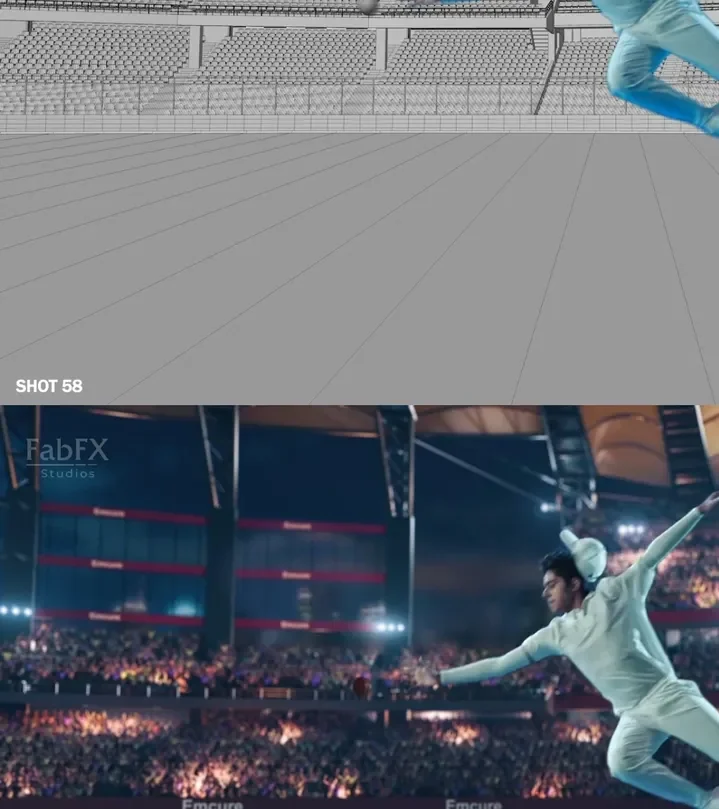
The shot
A cutaway is an inserted shot, often a reaction, object detail, or atmosphere image, that briefly leaves a scene's main action without needing to show that action continuing. FX's "Alien: Earth," documented in a CineMontage account of the show's visual-effects editorial, used cutaways for exactly this structural reason: lead visual effects editor Glenn Cote describes a sequence where, rather than sustain one continuous take, the team "ended up using those devices" -- cuts to what a character was seeing, and to debris and smoke -- "to compress this sequence," a credited production's own account of the convention in use. Luma Labs' Ray3.14 FAQ documents a matching generation feature for atmosphere or object shots: image-to-video generation from a single uploaded image.
What the documents show
The CineMontage account establishes, from a named, credited visual effects editor on a produced series, that a cutaway's job is structural: it lets an edit skip past continuity that would otherwise need to be shown continuously, by giving the audience something else to look at. This is a verified production account, not a general claim about all cutaways. Luma's FAQ, a living vendor document reflecting the Ray3.14 model as retrieved on 16 September 2026, states that image-to-video generation is available up to five seconds in duration at several resolutions, but also states plainly that this model "lacks character consistency and the reference feature" -- a limitation that matters far less for a cutaway, which by definition does not need to carry a character's continuous identity across the cut the way a matching insert of the same actor would.
The workflow
Per Luma's documentation, a single reference image -- an object, a texture, a background detail -- is uploaded, a short motion description is added, and a clip is generated at the model's documented image-to-video duration; because a cutaway does not need to match a specific camera position or performer's continuity in the surrounding scene, the reference-conditioning limits documented elsewhere in this vendor's own FAQ are less consequential here than they would be for a shot required to carry a face across the cut.
What the tool does not change
Neither the CineMontage account nor Luma's documentation claims a generated cutaway removes the editorial judgment of where a cutaway belongs in a sequence, or how long it can run before the audience notices the gap it is bridging; Cote's own account describes the decision to add cutaways as a structural choice made by the editorial and visual-effects team, not an automated one.
- Does this cutaway need to carry any character identity across the cut, or only atmosphere?
- Is the generated shot's duration long enough to bridge the gap without overstaying it?
- Would the edit still work if the cutaway were an ordinary practical insert instead of a generated one?
A cutaway is one of the lower-risk editorial uses of a generated shot documented here, precisely because the craft convention it serves, established well before generative tools existed, already asks it to carry less continuity than a matching insert would.
Sources & reading trail
Verified production account of a credited visual effects editor describing cutaways used structurally to compress a sequence.
Source published: 10 February 2026 · Retrieved: 16 September 2026
Vendor documentation of image-to-video generation duration and the model's stated character-consistency and reference-feature limitations.
Source published: 18 September 2025 · Retrieved: 16 September 2026
Documentation, agreements and rulings establish the note; the workflow reading is Screen Method editorial analysis. This retrospective draft does not imply the site published on the event date.