
The shot
On 21 November 2023, Stability AI published an announcement releasing Stable Video Diffusion, an image-to-video model, with open weights on Hugging Face and code on GitHub. A paper published four days later documents the training method. Unlike the closed research systems that preceded it, developers could download the weights and run or fine-tune the model themselves.
What the documents show
Stability's own announcement calls this a 'research preview,' stating plainly that 'this model is not intended for real-world or commercial applications at this stage.' The model card lists concrete constraints: outputs run 14 or 25 frames at 3 to 30 frames per second, so clips are, in the card's words, 'rather short (≤ 4sec).' The card also states the model 'may generate videos without motion, or very slow camera pans,' that 'faces and people in general may not be generated properly,' and that it cannot be controlled through text or render legible text. The paper describes a three-stage training recipe, text-to-image pretraining, video pretraining, then high-quality video fine-tuning, and argues that systematic dataset curation, captioning and filtering, was what made the difference, a claim the authors make about their own method rather than one an outside group has replicated here. This is a research release with a published model card, not a verified production use.
The workflow
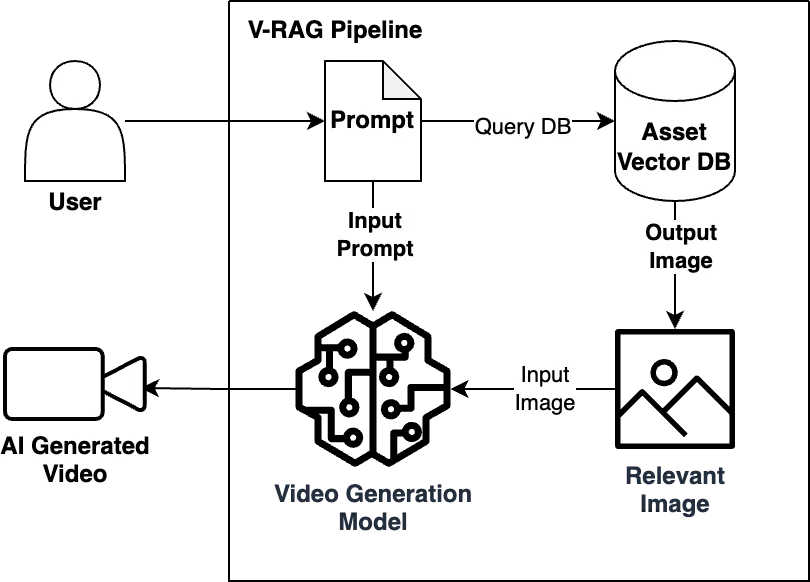
The documented path is narrow but concrete: a user supplies a single still image, and the model animates it into a short clip at a chosen frame count and rate, with no text prompt involved at this stage. Stability's own announcement describes a separate, forthcoming text-to-video interface aimed at 'Advertising, Education, Entertainment, and beyond' as future work, not something the November release itself provides. Because the weights are open, a technical crew could, per the license terms Stability names, integrate the model into a custom pipeline rather than depend on a hosted API, which is the specific shift this release documents relative to closed systems.
What the tool does not change
The model card's own limitations, unreliable faces, absence of text control, occasional static output, mark exactly where a human operator still has to intervene: selecting usable generations, directing a subject's motion by other means, and reviewing every clip before it reaches a cut. Stability frames the release as needing 'community insights' before wider deployment, which keeps the editorial judgment about what counts as acceptable output with the people running the model, not with the model itself.
- Does the workflow in front of you use the research-preview weights, or a separately licensed commercial version?
- Does the model card's stated frame count and duration match what the shot actually needs?
- Who is checking faces and static-motion failures before a generated clip is cut in?
Stable Video Diffusion's significance lies in distribution as much as capability: a company published weights a developer could run outside a closed API, at meaningful scale, for the first time. Its own model card is unusually candid about what still fails, which is the more durable lesson than any specific clip it produced.
Sources & reading trail
Stability AI's own announcement framing the release as a research preview, not for commercial use, and describing frame-rate and duration options.
Source published: 21 November 2023 · Retrieved: 16 September 2026
The model card's stated limitations on clip length, motion, faces, and text rendering, and its intended-use and out-of-scope-use statements.
Source published: Not established · Retrieved: 16 September 2026
The paper's account of the three-stage training method and the authors' own claims about the value of systematic data curation.
Source published: 25 November 2023 · Retrieved: 16 September 2026
Documentation, agreements and rulings establish the note; the workflow reading is Screen Method editorial analysis. This retrospective draft does not imply the site published on the event date.