
The shot
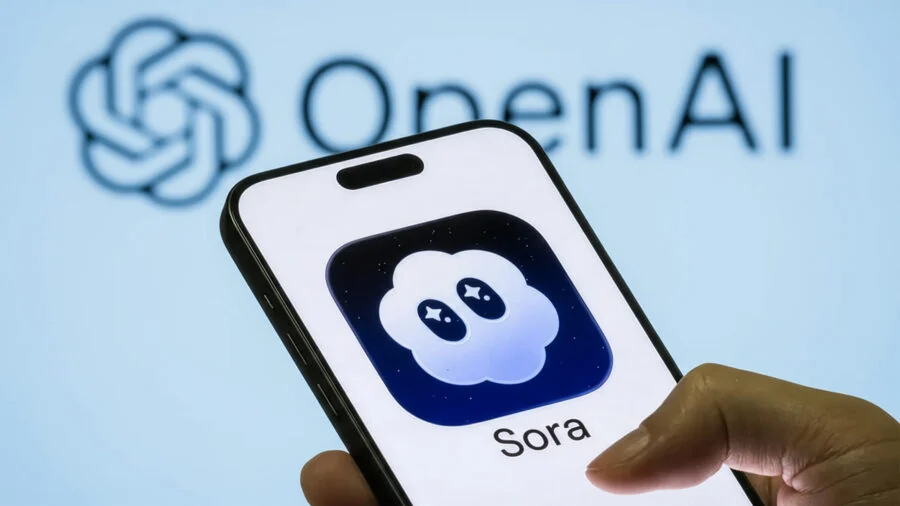
On 30 September 2025, OpenAI released Sora 2, describing it in its own announcement as "our latest video generation model," and paired the release with a new invite-based iOS app named Sora built around a "characters" feature that inserts a verified person's likeness into generated scenes. The rollout began in the United States and Canada. This is a single dated step combining a model update with a new consumer product, distinct from the 2024 Sora Turbo release inside ChatGPT.
What the documents show
OpenAI's announcement states Sora 2 is "more physically accurate, realistic, and more controllable than prior systems" and adds synchronized dialogue and sound effects; it gives a concrete physics example, that a missed basketball shot now "rebounds off the backboard" instead of the ball "spontaneously teleporting" as in earlier models. These are the vendor's own comparative claims, not an independent test, and the announcement calls the model "far from perfect." The Sora 2 system card, published the same day, names the new risk it identifies, "nonconsensual use of likeness or misleading generations," and states deployment is "restricting the use of image uploads that feature a photorealistic person and all video uploads," with stricter thresholds for minors. The two documents together separate a capability claim from a documented safety control.
The workflow
To use a character, a person records a short video-and-audio sample in the app to verify identity; the announcement states "only you decide who can use your character," with the ability to revoke access or remove any video containing it, including drafts made by others. Feed ranking is described as biased toward accounts a user follows, and the company states it is not optimizing for time spent in feed. ChatGPT Pro subscribers can also use an "experimental, higher quality Sora 2 Pro model" through sora.com, and OpenAI states a plan to bring Sora 2 to its API. Teen accounts receive default limits on daily feed generations and stricter character permissions, with parental controls managed through ChatGPT.
What the tool does not change
The announcement does not claim Sora 2 removes the need for consent management: likeness use is opt-in and revocable by the person depicted, and bullying moderation is described as handled by "teams of human moderators" alongside automated systems, not by the model. OpenAI frames the recommender as adjustable by natural-language instruction, so editorial control over what a feed shows stays a reviewable setting rather than an automatic outcome of the model.
- Does the cited system card's likeness-upload restriction still apply to the specific feature a project wants to use?
- Is a stated physics or controllability improvement attributed to OpenAI's own comparison, or to an independent test the reader can check separately?
- What consent and revocation mechanism does the documentation describe for anyone whose likeness could appear in a generated character?
Sora 2's launch is best read as two linked but separable claims: a modeling update OpenAI compares favorably to its prior systems, and a social product whose consent and moderation architecture is described in a companion system card rather than left implicit in the announcement's demo reel.
Sources & reading trail
OpenAI's own announcement of Sora 2's stated physics and controllability improvements and the paired iOS app's characters feature and rollout terms.
Source published: 30 September 2025 · Retrieved: 16 September 2026
OpenAI's system card naming the specific new risks Sora 2 introduces and the documented deployment restrictions on likeness uploads and minors.
Source published: 30 September 2025 · Retrieved: 16 September 2026
OpenAI's help-center notice stating the Sora app and Sora 2's web product were later discontinued on 26 April 2026.
Source published: Not established · Retrieved: 16 September 2026
Documentation, agreements and rulings establish the note; the workflow reading is Screen Method editorial analysis. This retrospective draft does not imply the site published on the event date.