
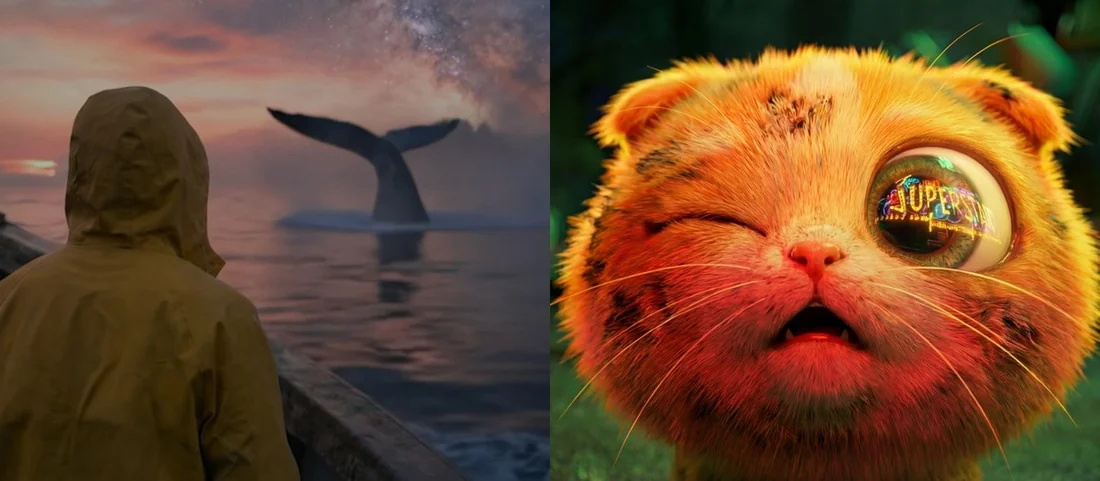
The shot
At Sundance 2026, Adobe commissioned two directors to make original short films using a mix of traditional craft and its Firefly video and image models, then published the results as case studies. Momo Wang directed Wink, an animated dramedy about a one-eyed stray cat who becomes a casino mascot before choosing to help shelter animals. Taryn O'Neill wrote and directed MythOS, a hybrid live-action and generative drama narrated by a whale. Both films premiered at the Adobe House, and Adobe frames the pairing as evidence of how generative tools fit a small production rather than replace it.
What the documents show
Adobe's own Sundance dispatch, published 30 January 2026, is a vendor-published case study: Adobe chose the directors, supplied the tools, and wrote the account. It names the specific software used on each film, including Firefly partner models Veo, Marey, Nano Banana, and Flux, plus ElevenLabs for voice and Creative Cloud apps for finishing. A companion post on Firefly Foundry frames these partner models as tuned to be 'commercially safe' and says the goal is to 'elevate creators — not replace them.' That framing is Adobe's own positioning, not an independent finding, though the directors are named and quoted about specific choices they made.
The workflow
Wang started with hand-drawn sketches, rendered them into a 3D style through Firefly, then used Generative Fill in Photoshop to combine variations into one character design. Firefly Boards served as the shared moodboarding and storyboard surface for a remote team. For MythOS, O'Neill's crew shot actors on green screen but had to generate AI backplates first, so the actors could be lit and positioned to match environments that did not yet physically exist. Wide and over-the-shoulder shots were generated entirely in AI from 'likeness cards' built with each actor's consent. Editing happened in Premiere, where a late decision to simplify the story was absorbed by quickly generating replacement shots instead of reshooting.
What the tool does not change
Adobe's account still describes a director choosing where generative tools entered the process and where they did not. Wang voiced her own lead character. Glitches in AI-generated footage were fixed with 'traditional VFX techniques,' not regenerated away. O'Neill's team needed actor consent before building likeness references, and the actors still had to be lit and blocked on a physical stage. Wang's own summary is blunt about limits: the technology does not replace the craft, she said, it 'sits alongside and tests it.'
- Which parts of this workflow would still require a director's judgment call on a smaller budget?
- What consent and likeness documentation exists before an actor's reference is used to generate a shot?
- Does the vendor's account distinguish what it built from what an independent production would need to rebuild?
Read as a vendor case study rather than an audit, Adobe's dispatch is useful for naming which specific tasks moved to generative tools on two real, credited productions, and for showing that the directors it selected still describe traditional filmmaking judgment as the backbone of the work.
Sources & reading trail
Adobe's own account of the two commissioned films, the tools used on each, and quotes from both directors about the workflow.
Source published: 30 January 2026 · Retrieved: 16 September 2026
Adobe's own framing of Firefly's partner models as commercially safe and positioned to support rather than replace creators.
Source published: 22 January 2026 · Retrieved: 16 September 2026
Documentation, agreements and rulings establish the note; the workflow reading is Screen Method editorial analysis. This retrospective draft does not imply the site published on the event date.